
Anthony Browne is one of the most important living figures in children’s literature, both as an author and an illustrator. Despite his busy schedule, I had the opportunity to conduct a short yet very rewarding and insightful interview with him.
Which books, writers, and illustrators influenced you during your childhood?
Treasure Island, mainly for its illustrations by N.C. Wyeth, The Just William stories by Richmal Crompton, and Alices Adventures in Wonderland.
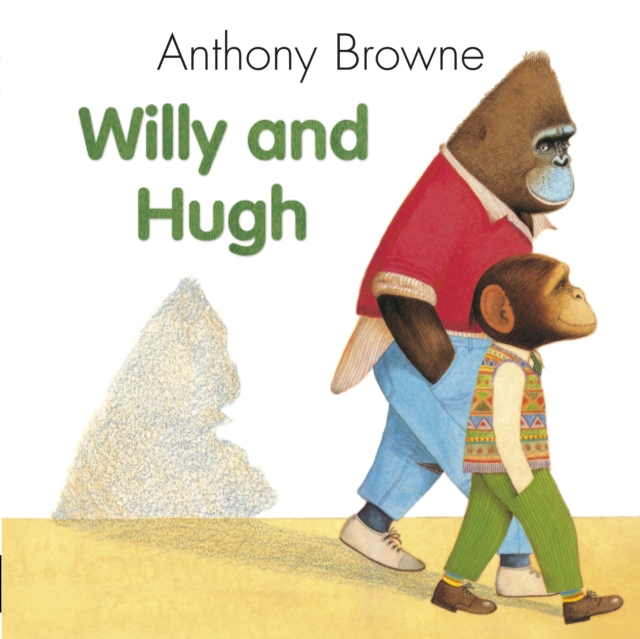
What does it mean to you to illustrate a children’s book? Your images often express things that the text does not state explicitly. In this sense, do you see illustration in children’s books as something that accompanies the text, or as a narrative layer that is equal to it — or even, at times, more dominant?
I definitely think that illustration is a narrative layer that is equal to the text, if not more dominant. Many things can be hidden in an illustration that needn’t be included in the text. Each viewer can interpret the illustrations in many different ways.
Today, children’s literature seems to be evolving toward a more sterile and more pedagogical direction. How do you view this transformation? Do you think this approach nurtures children’s imagination, or does it limit it?
I think it limits it severely.
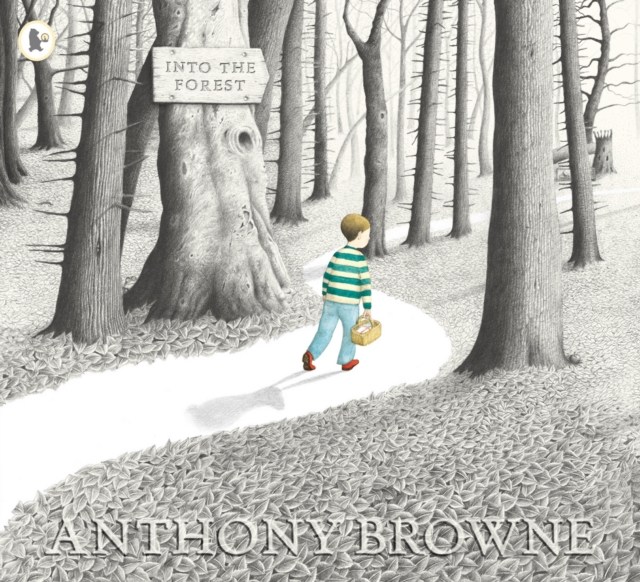
Looking at your books, one gets the sense of a world where surreal imagery and the language of children’s books intertwine, addressing both children and adults. What has been the most memorable or affecting feedback you have received about your work so far?
A child once wrote me a letter
“Dear Mr. Browne,
You don’t need to be big and strong, just watch where you’re going”
This is referring to the illustration in Willy the Wimp where Willy walks straight into a lamppost!
Another letter read “ Is Willy (chimpanzee) a real person or did you make him up?”
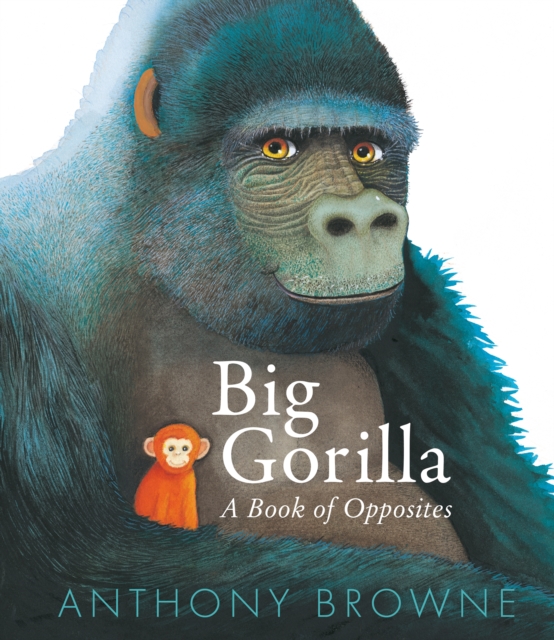
In your books, recurring images such as gorillas, mirrors, and forests stand out. Are these elements part of a consciously constructed “personal mythology,” or have they emerged over time as an organic visual language?
They have emerged over time as an organic visual language.
We are living in an age in which artificial intelligence is rapidly transforming modes of visual production. How do you see the future of illustration in children’s books? How do you think this change will affect the role of the illustrator?
I think it’s incredibly serious and quite possibly threatening the careers of many illustrators today.