English/ Other Languages
-
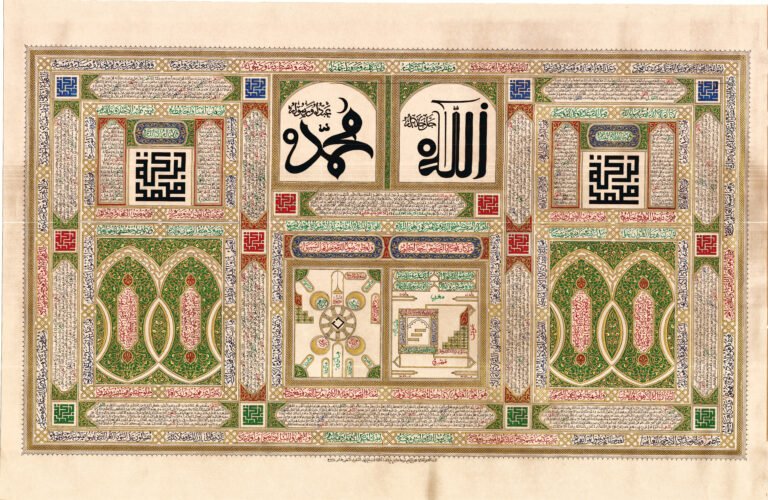
Abderrahim Oujaha: In the Maghrib, the art of the shamāʾil and the prophetic hilya is tied to a long history of love and veneration for the noble person of the Prophet ﷺ, a tie clearly reflected in the region’s heritage
Abderrahim Oujaha is a Moroccan calligrapher who teaches calligraphy at the Ṣahrīj Madrasa in Fez. At the heart of his work are Maghribi panels of the shamāʾil, the noble description of the Prophet. We…
-
عبد الرحيم أوجاحا: يرتبط فن الشمائل والحلية النبوية في الغرب الإسلامي بتاريخ طويل من المحبة والتعظيم للجناب النبوي الشريف ﷺ، وهو ارتباط انعكس بوضوح في التراث المغربي
عبد الرحيم أوجاحا خطاطٌ مغربي يُدرّس فن الخط بمدرسة الصهريج بفاس. وتقع في صميم أعماله لوحات الشمائل المغربية، وهي اللوحات التي تحمل الوصف النبوي الشريف. وقد حاورناه حول هذا التقليد. هل يمكنكم أن تحدثونا…
-
Martin Tielke: Schmitt was a concrete political thinker; for Jünger, reality was merely a parable
Ernst Jünger and Carl Schmitt, who set out to grasp the singular features of the epoch in which we live, are two pioneering figures whose influence is still felt today. We spoke about their…
-
Alexander D. Knysh: Sufism provided a spiritual foundation for the Futuwwa Movement
Alexander Knysh is Professor of Islamic Studies at the University of Michigan, Ann Arbor, USA, and Principal Investigator in the interdisciplinary Program in the Study of Mysticism, Tampere University, Finland. His academic interests include…
-
Gregory Vandamme: For Ibn Arabi, there is no ontological distinction between the spiritual and the political
Ibn al-Arabī’s legacy has been reinterpreted in various forms—ranging from political legitimacy to the quest for radical freedom—across a broad spectrum extending from the Ottoman era to modern figures such as Ivan Aguéli and…
-
Gregory Vandamme: Per Ibn Arabi non esiste alcuna distinzione ontologica tra lo spirituale e il politico
L’eredità di Ibn al-Arabî è stata reinterpretata in diverse forme, dalla legittimità politica alla ricerca della libertà radicale, in un ampio spettro che spazia dall’impero ottomano a figure moderne come Ivan Aguéli e René…
-
Francesco Ingravalle: Spann’s social philosophy is an ontology of the preservation of the principles of a world that no longer exists and that must be made to exist again
The thought of Othmar Spann, built around anti-individualist universalism and the corporative State (corporatism), constituted — together with the Spannkreis school that formed around his university chair — one of the most original and…
-
Francesco Ingravalle: La filosofia sociale di Spann è un’ontologia della conservazione dei principi di un mondo che non esiste più e che si tratta di far esistere di nuovo
Il pensiero di Othmar Spann, articolato attorno all’universalismo anti-individualista e allo Stato corporativo (corporativismo), ha costituito, insieme alla scuola Spannkreis che si è formata attorno alla sua cattedra universitaria, uno dei nuclei più originali ed efficaci…
-
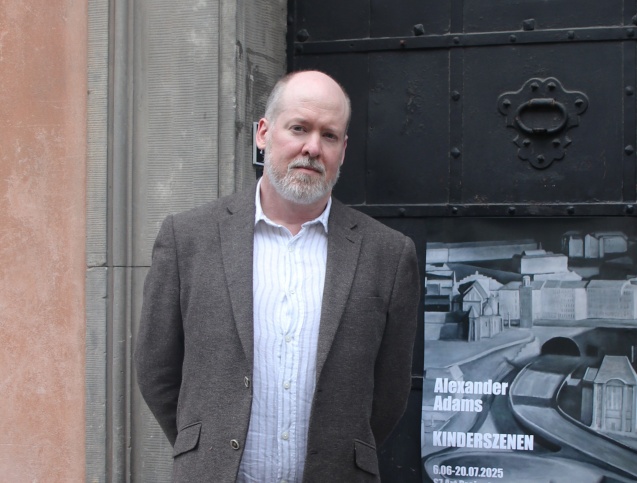
Alexander Adams: The decoupling of the sacred and the artistic – the liquidation of tradition – has left artists unmoored
We spoke with British painter, writer, and critic Alexander Adams about the rootlessness, lawlessness, and aesthetic disintegration that have gripped the contemporary art world. Adams, who has uncompromisingly criticized the intellectual decline of art…