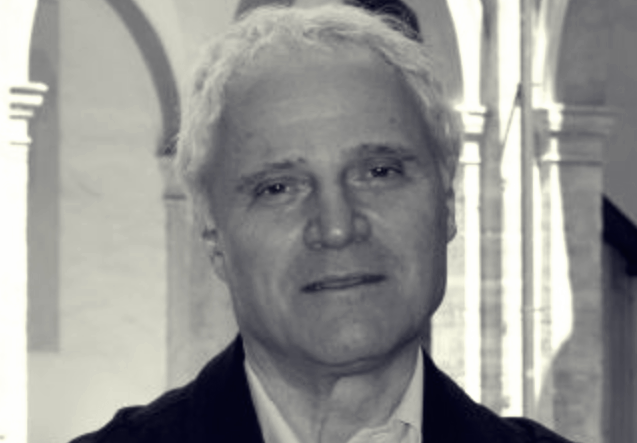
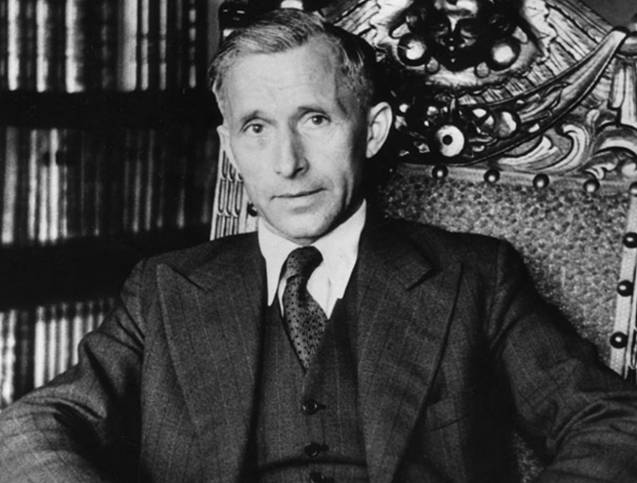
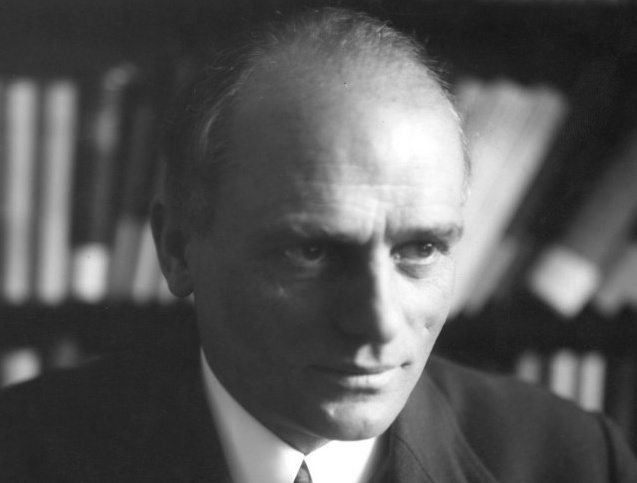
Rodolfo Sideri: According to Sorel, the mysticism of action has a teaching value, because it is the revolution itself that shapes revolutionary consciousness

Georges Sorel considered himself a Marxist throughout his life and said so openly. Yet his legacy has never belonged to either the left or the right alone: the same theory of will and myth fed Gramsci’s thinking on hegemony on one side, and Mussolini and the German Conservative Revolutionaries on the other. We spoke with Rodolfo Sideri about how such a wide range of heirs was possible.
How did the theory of “political myth” and voluntarism, which Georges Sorel developed as an alternative to Enlightenment rationalism and objective plans for the future (utopias), lay the philosophical groundwork for the Conservative Revolutionaries’ anti-Enlightenment idea of “organic/national myths” and for right-revolutionary strategies of mass mobilization?
Georges Sorel is known to have been a point of reference for the national-revolutionary movements of the twentieth century. His theses freed the idea of revolution from the need for a structured, totalitarian party like the Bolshevik one. At the same time, they opened the way to the idea that the masses could mobilize on their own. In his thought, the mysticism of action has a teaching value, because it is the revolution itself that shapes revolutionary consciousness. This mysticism needed myth as a bridge between thought and action. The general strike is also a myth. This is not because it cannot be achieved, but because it is the midwife of revolutionary violence.
Sorel presents violence as a moral act that breaks through social decay and revives martial, ancient virtues. Where does this meet, morally and in method, the Conservative Revolutionary principle of “using radical, revolutionary means to return to historical roots and purity”?
For Sorel, revolutionary violence is moral by nature, mainly because it stands against the mediocrity of socialist intellectuals. Sorel took this idea from Tocqueville, who had also condemned the rise of a separate social group, the intellectuals, with influence over society. The intellectual has no place in the world of myth. What he practices is mediation, and in politics mediation takes the form of parliamentarism. The task of violence is therefore to reopen a gulf between the proletariat and the bourgeoisie, so that the fire of revolution can be lit. Violence answers the need to undo social peace. It rejects the abstraction of reintegration and works its way into the cracks of reality.
How is the “bourgeois mentality” defined in Sorel’s philosophy? Where does his critique of bourgeois decadence directly overlap with the Conservative Revolution’s hatred of the liberal-capitalist way of life, parliamentary bargaining and the society of comfort?
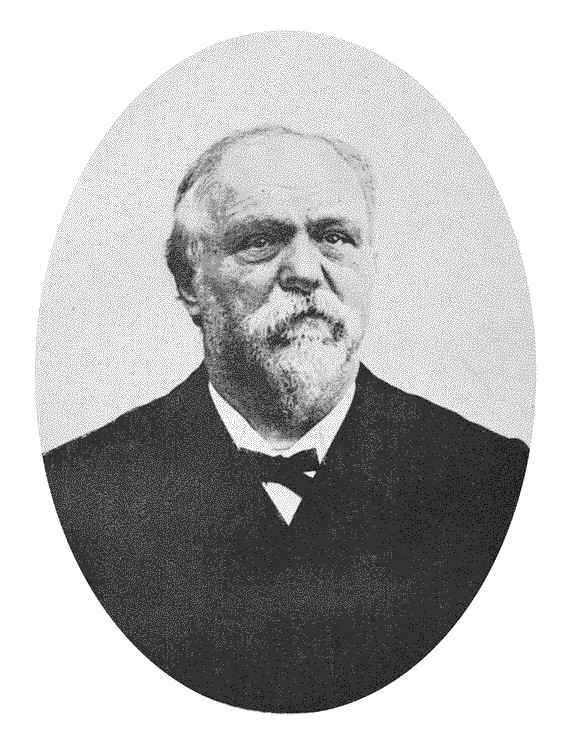
The bourgeois mentality thus appears as a sign of weakness and moral decline, one that drowns every ideal tension in the search for utility. Reflections on Violence says plainly that the bourgeoisie is not mainly, or only, an economic class. It is a human type, a parasite, and a form of culture that wears away man’s moral energies. Two things follow from this. One is the critique of the myth of progress, the true idea-force (idea-forza) of the bourgeoisie in every age. The other is the rejection of a linear view of history, which flattens consciences into a determinism that holds out the illusion of a better future while destroying action in the meantime. This is the most direct point of contact with the Conservative Revolution, because both reject the progressive role of the bourgeoisie and both oppose parliamentarism.
In my view, however, Sorel should not be claimed wholly for the Conservative Revolution. The Conservative Revolution is more of a framework that holds many different tendencies. A closer study, which cannot be done here, would show that many of the Sorelian themes that found their way into it belong to the shared inheritance of anti-modern, and even conservative, thought. On the other hand, the idea of the masses mobilizing themselves, for example, does not fit an aristocratic movement like the Conservative Revolution.
Sorel’s approach, centered on will and myth, rejects objective economic determinism. On one side, through Gramsci, it inspired left-wing theories of hegemony and collective will. On the other, in the hands of Mussolini and the Conservative Revolutionary elites, how was it transformed from the class-based myth of the general strike into the myth of the “organic nation/state”?
It is well known that Mussolini’s early political education took place in the world of revolutionary syndicalism. The future Duce of fascism even called Sorel “our master.” Mussolini took from Sorel an agonistic, struggle-centered view of life. The French thinker, for his part, saw in Mussolini the virtues of a future leader. In 1921 he predicted that the fascist party would be able to carry out a revolution in Italy that France would have to follow as a model.
So Gramsci also learned from Sorelian theory. Even so, there is no doubt that until his death, shortly before the March on Rome, the philosopher regarded fascism as the most original social phenomenon in Italy and saw it as free of the intrigues of the politicos. Sorel’s letter to Croce of 26 August 1921 bears witness to this.
In my view, the Great War played the decisive role in turning the myth of the general strike into the myth of the Nation, since it brought the nationalist element into Mussolini’s revolutionary myth. As for the organic state, I think we have to wait for the founding of the regime, for corporatism, and for the totalitarian will that came after the Ethiopian War. The Nation and the organic state are neither the same term nor the same concept.
Rejecting crude economic determinism, Sorel stressed a form of mobilization centered on will, myth and culture. How does this approach echo today?
First we should be clear about where this debate takes place. In mainstream culture, the Sorelian themes you mention are completely absent, and nothing else could be expected. If we look instead at dissident culture and at certain spaces that are marginalized but not marginal, Sorel is still a point of reference. He is so, however, within an outlook that does not, at present, allow for real political change. That is why these spaces tend either to take refuge in myth, or, following Gramsci’s lesson, to make culture the ground for ideas that can move freely in the public sphere and even bring it under their hegemony.