Marcello Veneziani: Conservative Revolution in Italy were political spiritualism, heroic voluntarism, and a historical memory reimagined in an era of radical change
The discourse on the Conservative Revolution holds a significant place in Italy’s intellectual history. We spoke with Marcello Veneziani, who penned one of the foundational texts on this current, exploring the trajectory of the Italian conservative revolutionary movement and its broader implications.
When we consider the concept of the “Conservative Revolution,” we actually perceive it as a quest for an authentic path. In your opinion, what is Italy’s authentic and original path? How do you define the “Italian Ideology” or the Italian Conservative Revolution? In what ways does it distinguish itself from the German Conservative Revolution?
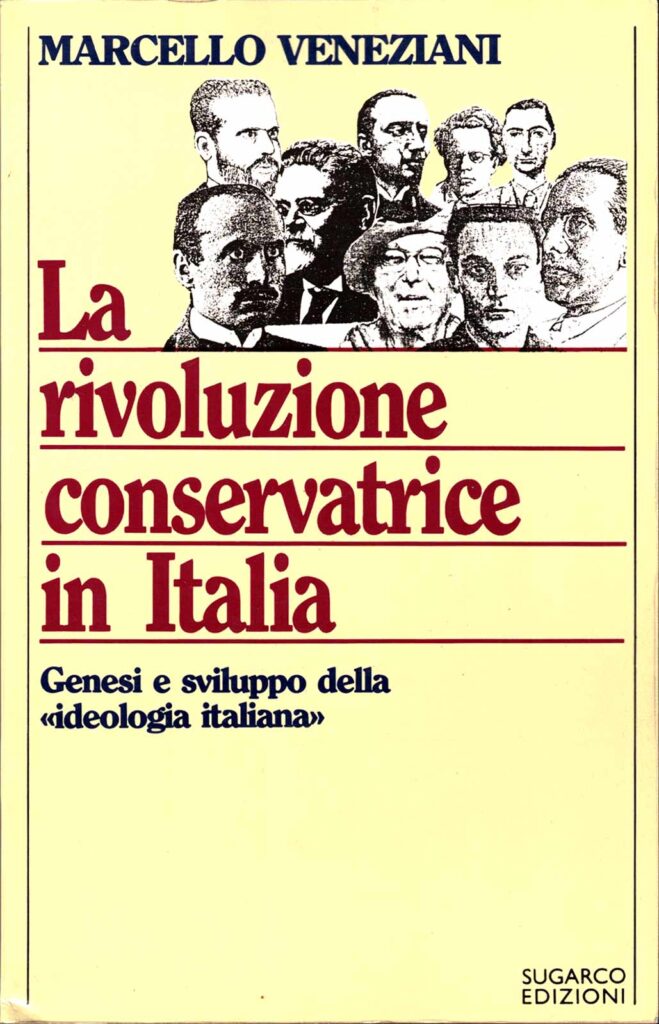
The Conservative Revolution was an attempt to forge a synthesis between a commitment to tradition and the innovative, titanic spirit of modernity. It stems from a critique of modernity, but its goal is neither to mourn the past—as is the case with reactionary thought—nor to merely salvage the present, which is the intention of conventional conservative thought. Rather, it aims to confront the challenges of the future, technology, and development, while simultaneously revitalizing foundational, traditional principles and identity values.
The defining traits that distinguished the Conservative Revolution in Italy were political spiritualism, heroic voluntarism, and a historical memory reimagined in an era of radical change. These are the very features that both connect it to and differentiate it from the Central European Konservative Revolution.
This was, fundamentally, the spirit of the Renaissance, which blended the new and the modern with classical and ancient models. Later, it became the spirit of the Risorgimento and the birth of a unified Italy—undertaken in the name of its ancient history and its future mission. This trajectory extended into the nationalism and cultural interventionism that fueled Italy’s entry into the First World War, ultimately leading to Fascism, the emergence of what I have termed the “Italian Ideology,” and certain characteristics of what has been described elsewhere as “reactionary modernism.”
Could you explain the concepts of the “Piedmontese Ideology” and the “Mediterranean Ideology”? How did the historical and philosophical conflict between these “two Italies” influence the birth of Fascism and the country’s search for identity?
Since the time of its unification, Italy has harbored two opposing tendencies: the impulse to “cross the Alps” and assimilate increasingly into Northern Europe—aligning with a Calvinist, Protestant, progressive, secular, radical, and liberal culture—and the impulse to root itself in the Mediterranean and its Latin, Greek, and Catholic origins, expressing itself through a national and social line of thought that inherited a religious tradition. The former was a progressive and industrialist culture; the latter was a revolutionary-conservative or Roman-Catholic culture.
Giovanni Giolitti was the primary interpreter of the Piedmontese line, while Francesco Crispi was the first to embody the Mediterranean line. This dyad later repeated itself with Fascism and anti-Fascism. After the war, it manifested as a progressive, secularist, and anti-Fascist “Piedmontese Ideology,” contrasted against a “Mediterranean preference.” This Mediterranean outlook was shared by a vast portion of the Christian-inspired world, but it also defined the socialism of Bettino Craxi, the social and national right, and, in certain respects, Silvio Berlusconi.
The principal criticism leveled against conservative revolutionism is that it paved the way for German Fascism (Nazism). How do you explain the trajectory that led to Italian Fascism?
Indeed, the simultaneous appeal to tradition and modernization, political spiritualism, and references to national identity and the Italian mission created a fertile climate for the birth and development of Fascism. However, just as a large portion of the so-called German Conservative Revolutionaries distanced themselves from Nazism—and especially from its horrors—the Conservative Revolution in Italy also passed through Fascism, and was permeated by it, without ever fully merging into it or being exhausted by its historical experience and tragic epilogue.
There is a specific trait that destined Fascism to shipwreck: its will to power and its vision of war as a “judgment of God”—a necessary ordeal to validate dominance. This aspect is not inherently tied to the Conservative Revolution, and it was the decisive factor that dragged the Fascist regime into the abyss.
In what ways did the Italian Ideology reproduce myths and rituals? How did politics cease to be an administrative tool and transform into an art of “myth-making”?
One of the essential traits of the Conservative Revolution is what was termed the aestheticization of politics, a concept also discussed by Walter Benjamin. It arises from the conviction that politics is an art form, and that the true prophets of the new era are the “armed aesthetes,” the soldier-poets, and the men of letters. Figures like D’Annunzio and Marinetti believed in a “total poetry” that pours directly into history and life, transforming into political liturgy, ritual, and symbol—and thus, the incessant creation of myths.
The true difference between the revolutionaries in the name of Marx and the Conservative Revolutionaries lies precisely in this rediscovery of myth and the emotional mobilization of the masses. In this framework, the priestly or pontifical role is entrusted to the Vate (the Prophet-Poet), the Soldier-Poet, or the Condottiero (Leader) who knows how to strike the deepest chords of a people.
Could you speak about the concept of “cultural interventionism” (cultura interventista)? How does it philosophically distinguish itself—in the context of action and will—from the concept of “metapolitics,” which aims to shift cultural hegemony over time?
Cultural interventionism has romantic roots, but it also possesses an undeniable kinship with Mazzini’s slogan “Thought and Action,” or with Marx’s Eleventh Thesis on Feuerbach, which states: “Philosophers have hitherto only interpreted the world in various ways; the point is to change it.” It represents culture turning into action and transformation; theory pouring into praxis. It is no longer satisfied with mere knowledge or the creation of an artwork, but seeks completion in politics through metapolitics and voluntarism.
Cultural interventionism is perhaps the first actual model of cultural hegemony. It is no coincidence that Antonio Gramsci, besides being a Marxist, was a revolutionary interventionist, much like Mussolini. Long before Gramsci theorized cultural hegemony in prison, the philosopher Giovanni Gentile (as Minister of Public Education) and later Minister Giuseppe Bottai attempted to realize that very project of cultural guidance within the Fascist regime. Yet, the original template remains the cultural interventionism of the first two decades of the twentieth century.
Julius Evola occupies a very unique position both as a traditionalist and as a figure of the Conservative Revolution. How do you evaluate him within the framework of Italian conservative revolutionary thought?
Evola did not fond of the labels “revolutionary” or “conservative,” yet he viewed the Conservative Revolution as a fertile current of thought that influenced its time, and one to which he ultimately belonged, even if he primarily identified with a doctrine of pure Tradition.
Evola did not wield a major influence over historical events. He was discovered and followed by minorities who were rather marginal to the great historical shifts. Although his influence has been constant and quite profound, it has always remained confined to external, extremely elitist, and minoritarian spheres relative to mainstream historical and political processes. Evola remains, fundamentally, an impolitical thinker (pensatore impolitico).
Today, Ferrari—the world’s most concrete embodiment of Italian aesthetics, engineering, and the myth of speed—presents its first fully electric model, “Luce”: a jarring turning point. Should we interpret this as a victory of conservative revolutionary logic, which “seeks to defeat modernity with its own weapons” (where digital rationalization replaces the traditional roar of the engine, craftsmanship, and mechanical ferocity), or as the surrender of authentic Italian aesthetics to the global technotronica era?

The most widespread consensus regarding this new automobile is that it is a poorly executed, expensive creation, and a partial betrayal of the Cavallino (Prancing Horse) tradition. It does not strike me as something configured in the wake of Futurism or other artistic and aesthetic movements, let alone along the lines of the Conservative Revolution applied to the realm of machines.
To me, it appears instead as yet another sign of the decadence of an industrial empire—that of FIAT—which, in its decline, has dragged down important brands and names across various sectors, including the legendary Ferrari.