
Ibn al-Arabī’s legacy has been reinterpreted in various forms—ranging from political legitimacy to the quest for radical freedom—across a broad spectrum extending from the Ottoman era to modern figures such as Ivan Aguéli and René Guénon. We spoke with Gregory Vandamme about the ontological structure of Ibn al-Arabi’s thought, the alternatives the futuwwa tradition might offer the modern individual, and Aguéli’s unique understanding of sharia and freedom.
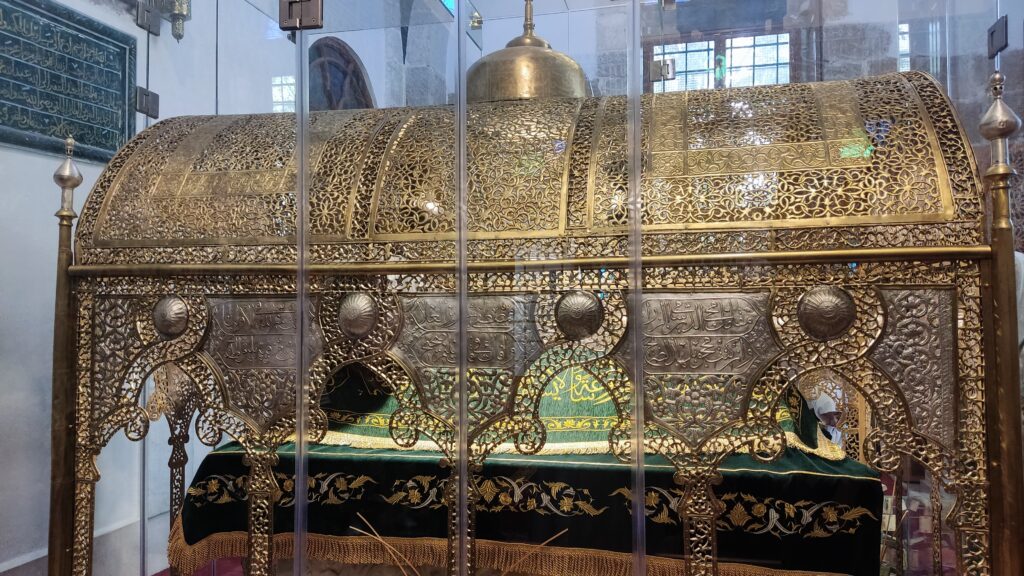
The historical milestone of Sultan Selim I unearthing Muhyiddin ibn ‘Arabi’s grave and constructing a mausoleum demonstrates that the Shaykh al-Akbar’s thought was utilized not merely as a mystical pathway, but as a source of political legitimacy for a classical empire. Centuries later, we see this very same Akbarian heritage re-emerging through modern figures like Ivan Aguéli and René Guénon. What is the core ontological structure within Ibn ‘Arabi’s thought that allows it to simultaneously inspire a classical imperial worldview and radical anti-modern intellectual movements? Why does this philosophy remain such a potent, recurrent reference point capable of being reconstructed across vastly different eras?
This question points directly to the heart of what some have called the “theologico-political” question in Islam. In my view, it is not confined to Ibn ‘Arabî’s thought, but concerns Sufism as a whole and, ultimately, the Islamic religion itself. The question might be formulated as follows: to what “form of life”—to borrow Agamben’s expression—or “way of life”—in Hadot’s sense—should the human experience of Islam, of Sufism, and of Islam as conceived by Ibn ‘Arabî give rise? Between the life of the spirit and the organisation of the community, how are the various dimensions of human existence to be ordered, ranked, and articulated?
This is ultimately the entire question of the sharî’a and its purpose: is it a rule of life for human communities, a path of individual realisation grounded in personal ethics and ascetic discipline, or both at once?
The entire history of Muslim communities may be read as the unfolding of the various possible answers to this question. Throughout this history, Sufism in particular has served as an interface between the individual and the community. From the earliest period, Sufi masters sought, on the one hand, to centre religious life upon the individual’s inward spiritual experience and, on the other, to make sense of the full range of Islamic rituals and norms as means of cultivating and deepening that experience.
Returning to the political question in the strict sense, two tendencies thus emerged and became formalised at an early stage within Islam, and within Sufism in particular. On the one hand were those who legitimised the established authority, political and institutional stability, and conformity to prevailing norms as means of preserving the conditions necessary for an authentic spiritual life. On the other were those who, by contrast, opposed forms of power, institutions, and normative systems that they considered unworthy of Islam’s spiritual demands.
What is distinctive about Ibn ‘Arabî’s thought is perhaps its refusal to yield entirely to either tendency. Instead, it seeks to sustain the tension between them so as to preserve Islam’s spiritual vitality as fully as possible. In other words, for Ibn ‘Arabî, the sharî’a concerns both the individual, in the innermost intimacy of his or her conscience, and the community, in its endeavour to secure appropriate conditions for each individual’s spiritual journey according to their particular dispositions and inclinations. In this respect, Ibn ‘Arabî clearly stands in continuity with his predecessors in the Sufi tradition, although he gives this approach its greatest possible scope and breadth.
For Ibn ‘Arabî, there is no ontological distinction between the spiritual and the political, because his ontology is what I have called “correlative”[^1]: it understands things as relations woven into being. Each reality is what it is only by virtue of its relation to another reality. The things that make up the world are so many nodes at which an indefinite number of relations converge; taken together, these relations weave the fabric of reality. His approach therefore invites us to enter more deeply into the complexity, paradox, and tension inherent in reality as it is. Yet this form of perspectivism does not amount to a horizontal relativism, since the web of relations unfolds according to a definite metaphysical and cosmological order or hierarchy. This order is that of the human being itself: from the metaphysical reality of the Perfect Human Being (al-insân al-kâmil), the supreme relation in which all the relations of the world converge, to the concrete presence on earth of the human being as “caliph”, situated at the farthest end of the cosmological fabric.
It is therefore unsurprising that such a body of thought could be used both to formulate a metaphysical justification for a totalitarian political order and, conversely, to inspire a radical critique of every political order—and, a fortiori, every theologico-political order—each in the name of the same conception of the metaphysical nature of human reality. What I find particularly interesting in Aguéli, and in Guénon to a different extent, is that each attempted, in his own way, to reformulate this metaphysical anthropology and its relationship to religious normativity in response to the challenges of his time. They did so in a new language that yielded neither to the sterile conservatism of past forms nor to the compulsive anti-conformism characteristic of a certain modernity. In my view, this is precisely what places them within the intellectual and spiritual undertaking of Ibn ‘Arabî.
Ernst Jünger’s concepts of the “Anarch” and the “Forest Rebel” (Waldgänger) embody an existential quest to safeguard inner autonomy against the totalizing surveillance of the modern state and mass society. This stance bears an uncanny structural alignment with the Sufi doctrine of Melamet and the principle of Halvet der Encümen. Beyond mere conceptual parallels, both share a fundamental concern for preserving man’s authentic existence. How can Sufism, and specifically the tradition of Futuwwa (spiritual chivalry), offer a viable alternative to the modern individual facing an existential crisis caught in the matrix of technology, bureaucracy, and hyper-surveillance?
There is indeed a connection to be drawn between certain modern quests for inward emancipation from forms of life that have become increasingly constraining and standardised, and certain principles lying at the heart of Sufi spirituality. The notion of futuwwa initially referred to concrete forms of association independent of the state: armed bands whose members upheld a demanding ethical code and radical virtues, which they sought to place at the service of local populations while remaining entirely independent of established social structures. These forms of politico-spiritual militia were gradually dismantled or absorbed by successive states. Their governing principles, however, were fully incorporated into Sufism and contributed in particular to the development of the initiatic and symbolic dimensions of craft guilds, which survived into the twentieth century in many countries.
What futuwwa brings to light is precisely the question of “lordship” and its relationship to freedom. According to the Qur’ânic account of the primordial covenant (7:172), all human souls collectively acknowledged the One God as their “Lord”. Consequently, none can claim the slightest lordship over another—nor can any collectivity, whether informally constituted as a society or formally organised as a state. In other words, by collectively acknowledging divine lordship, humanity thereby acknowledged the very principle of its freedom. This does not prevent human beings, individually or collectively, from recognising and conferring a certain precedence upon others—those whom the Qur’ân calls “those vested with authority” (ulū l-amr, 4:59). Yet such authority can only be founded upon the individual’s full recognition of it; it cannot be imposed as a lordly fait accompli.
Any society that is not founded upon the radical human freedom guaranteed by divine lordship therefore constitutes, at some level, a betrayal of Islam.
Sufi masters accordingly found in the principles of futuwwa a means of inwardly resisting the hegemony of the state and the imposition of forms of life that disregard this immutable principle upon which humanity is founded from an Islamic perspective. Rather than attempting to subvert the framework of social life—an undertaking that generally ends in the most brutal repression—they cultivated an inward emancipation from that framework, thereby preserving the possibility of a fully “free” humanity. The political project of Sufism might almost be summarised as follows: to cultivate an inner freedom which, through being held in common, might recreate the conditions for outward freedom.
Ivan Aguéli is a uniquely striking figure who emerged from within Western modernity, traversing seemingly contradictory domains as a painter, an anarchist, and a Sufi. Does Aguéli remain merely a marginal and eclectic anomaly in the West, or does he deserve to be re-evaluated as an authentic, sophisticated theorist within Islamic thought? Could you elaborate on the highly original concepts he brought to the forefront?

Aguéli is undoubtedly one of the most original authors in his attempt to produce an Islamic thought fully rooted in its modern Western context. If we take Aguéli’s thought—and the way in which he himself presents it—seriously, he must be situated within the continuity of the Islamic tradition, and of Sufism in particular, rather than too readily dismissed as an eccentric and romantic modern Westerner. Aguéli described himself as a “servant of the saintly friends of God” (khādim al-awliyāʾ). It therefore seems important to approach his work as a sincere effort to translate the reality of Islam and Sufism into a modern language—one that fully embraces the context of Western modernity, both in its socio-political concerns and in its aesthetic explorations.
In this respect, Aguéli displays a double radicality: he is radically Muslim, radically faithful to the tradition that preceded him and within whose continuity he situated himself, yet also radically modern, in the sense that he repudiates nothing of his original context—that of Europe at the turn of the twentieth century. Aguéli’s style is consequently disconcerting, moving freely from theological considerations to reflections on modern painting, and from doctrinal explanations to political reflections on the future of Western societies. Yet, as I have attempted to show in a recent study,[2] behind the veil of this apparent eclecticism lies an extraordinarily coherent body of thought—one that most often expresses, in an original yet highly precise manner, principles drawn directly from the work of Ibn ‘Arabî.
One of the most striking examples of his ability to conceptualise and translate principles derived from traditional Islamic thought into a new language is his understanding of the sharî’a. According to Aguéli, its underlying principle is to preserve what he calls “lordly freedom”—or, more precisely, in the original French, liberté dominicale—, the radical freedom of the human being as the corollary of humanity’s primordial acknowledgement of divine lordship. The entire apparatus of the sharî’a is thus intended to provide human beings with the means to cultivate this freedom and protect it against every attempt at alienation. Islamic law is therefore there to serve individuals and safeguard their freedom, not to impose upon them an order to which they are required to conform.
By making freedom both the principle and the ultimate end of the sharî’a, Aguéli thus outlines a perspective that offers a new understanding both of the Islamic religious ethos and of the modern idea of freedom.
[1]: See “L’ontologie corrélative d’Ibn ʿArabī : Métaphysique de l’être et de ses relations”, in La non-dualité : Perspectives philosophiques, scientifiques, spirituelles, ed. J.-M. Counet, Leuven, Peeters, 2021, pp. 89–102. https://doi.org/10.2307/j.ctv2114g8d.8
[2]: “Akbarian Anarchism: Ivan Aguéli (d. 1917) on Islam, Freedom and Sharīʿa”, Religiographies, vol. 3, no. 2 (2024). https://doi.org/10.69125/Religio.2024.v3.n2.6-24