Hammad Gillani: My work is about navigating dualities—this constant push and pull between tension and stillness, conflict and resolution
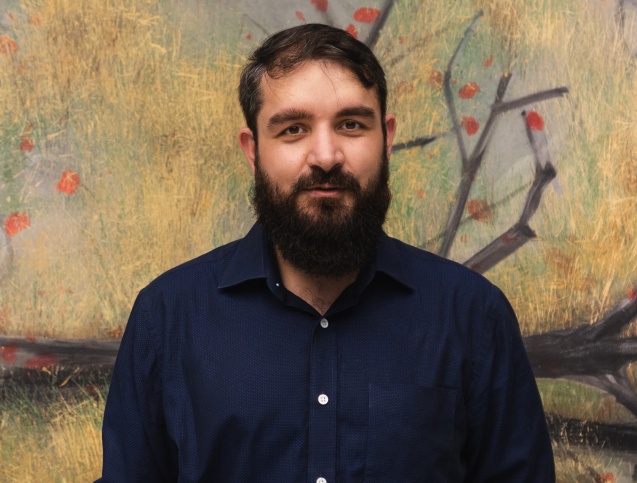
Hammad Gillani stands at the intersection of numerous narratives as an artist. Hailing from a Pakistani family of scholars and Sufis spanning generations, he bridges this deep-rooted heritage with contemporary art practices, taking miniature painting as his point of departure. We spoke with him about his exhibition, War and Peace.
Could you briefly introduce yourself to our readers? Having your family roots trace back to Sheikh Abdul Qadir Gilani is a truly impressive background. How would you describe the influence of both the spirit of your birthplace and this deep-rooted family heritage on the cultural environment in which you were raised?
it is a pleasure to introduce myself. My name is Syed Hammad Ullah Shah Gillani, though in the art world, I am known as Hammad Gillani.
I was born into a Sufi family settled in the tribal regions of Pakistan, For generations, my family has been deeply rooted in religious scholarship and the profound traditions of Sufi practice.
The influence of my heritage on my upbringing was both spiritual and rhythmic. Our tradition is shaped by tariqat—the Sufi path—which centers on zikr (the remembrance of Allah and the Prophet SAW) and the pursuit of divine love under the guidance of a Murshid. Growing up, the cultural environment was defined by constant inward reflection and weekly spiritual gatherings, such as the Khatm-ul-Khawajagan held every Thursday.
This atmosphere of repetition, devotion, and meditation formed the very rhythm of my everyday life. It did more than just shape my spiritual sensibility; it instilled in me a specific way of seeing the world. The discipline of the Sufi path—the focus on the unseen and the power of repetitive practice—is the same energy I now bring to my studio, where the meticulous, repetitive strokes of my painting serve as a form of visual zikr.
The art of miniature requires immense patience and a profound consciousness of tradition. How did your path cross with this ancient art form? What was the fundamental motivation or that “first spark” that led you toward miniature painting?
My path toward miniature painting was neither direct nor planned. Being born in a tribal region of Pakistan, located along the Pakistan–Afghanistan border. Over time, this area became deeply affected by the conflict and Talibanization, and my family experienced displacement as a result. That period left a profound emotional impact on me, and I struggled with trauma and PTSD.
During one of my conversations with a doctor I was seeing at the time, we spoke about my early interest in drawing. That moment became a turning point it encouraged me to pursue art and eventually I applied to the National College of Arts (NCA).
It was at NCA that I encountered miniature painting for the first time. I was immediately drawn to its discipline, its intricate detail, and the depth of storytelling embedded within the tradition. The patience it demands and the meditative nature of its process resonated deeply with my inner state, offering both a form of expression and a quiet space for healing.
What is the underlying philosophy behind your exhibition “War and Peace”? Through this exhibition, which conflicts or reconciliations are you inviting the audience to reflect upon?
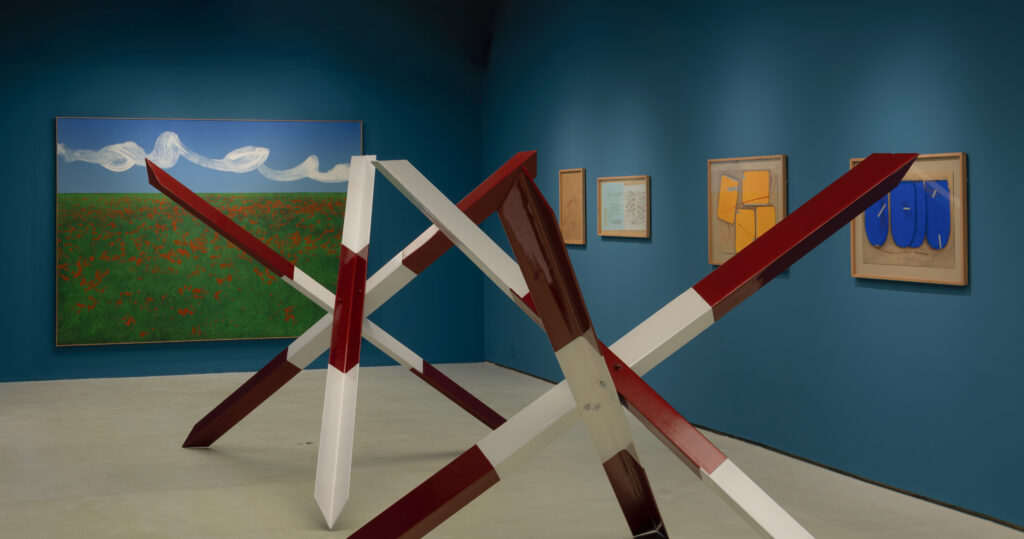
The exhibition War and Peace really grew out of an ongoing dialogue between me and my mentor and curator, Aisha Khalid. Through our conversations, she suggested the title, drawing a connection between Tolstoy’s exploration of human complexity and the themes I’ve been working with in my own practice.
At its core, my work is about navigating dualities—this constant push and pull between tension and stillness, conflict and resolution. That plays out both in my personal experiences and in the larger socio-political realities around us. What resonated with us, and what shaped the exhibition, is how these contrasts show up in my visual language through ideas of memory, fragility, and lived experience.
I’m not really interested in presenting things like war and peace as strict opposites. Instead, I see them as deeply connected, almost dependent on each other. One state flows into the other, and that transition is where a lot of meaning lies. Through the work, I’m inviting viewers to sit with that complexity and reflect on how both personal and collective histories are shaped by these ongoing cycles of disruption and healing.
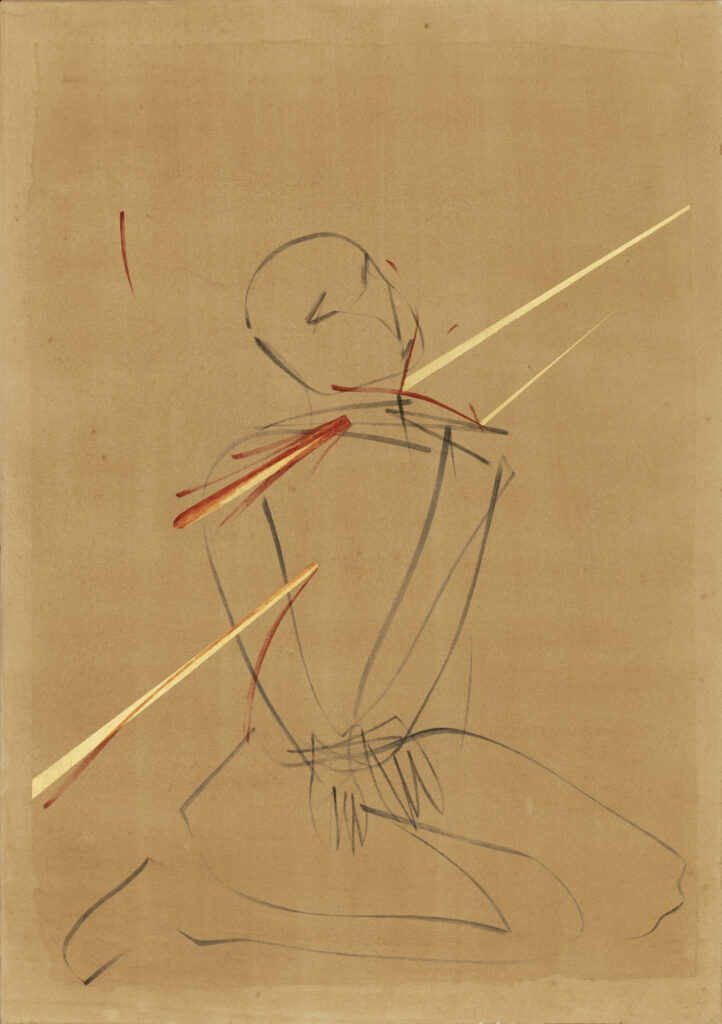
In this exhibition, we observe that you have moved away from the multi-layered, detailed, and ornamental structure of traditional miniature, leaning instead toward simpler and more minimal lines. Is this aesthetic choice a result of an internal transformation in your artistic perspective or a need to “strip away the excess”?
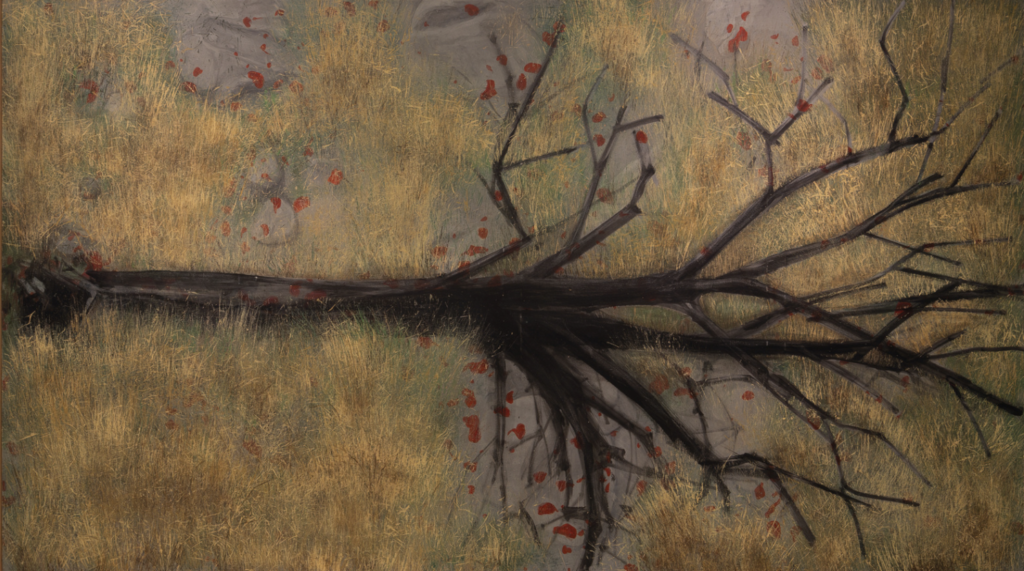
This shift came after a period of deep questioning that followed my formal training in Mughal miniature technique. Once I had mastered its traditional visual language—with all its complexity and ornamentation—I began to ask what was truly essential in the work. I started questioning what could be removed without losing the soul of the painting.
The change was both internal and intentional. I began a process of “stripping away the excess,” gradually reducing composition and medium until I reached a more simple and direct form. This led to an aesthetic that is minimal—sometimes almost childlike or primitive—but still feels meaningful.
However, even though the imagery became simpler, the process is still deeply rooted in tradition. I have not left miniature painting behind; I have redirected it. I still use a traditional squirrel-hair brush and the pardakht technique, building each “simple” line through thousands of very small, precise strokes.
In this way, I use a slow, traditional method to create something that looks quick and spontaneous. The result is a paradox: a painting that appears like a gestural mark but is actually made through great patience and labor.
For me, this body of work is a journey toward clarity—keeping the meditative spirit of my heritage while removing the ornamental weight that no longer fits my way of see.
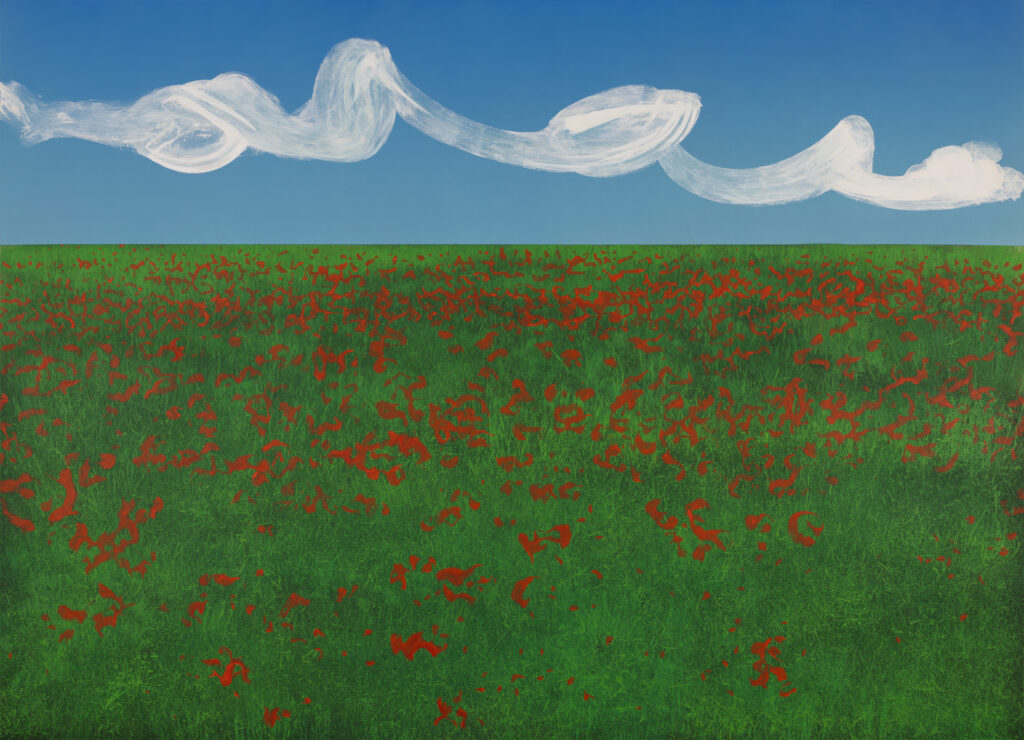
Your work “Landscape” reminds me of a moment years ago when my father brought home a large framed painting of a field of red poppies. I am particularly curious about the story behind this piece, which evokes both a peaceful field of flowers and poppies turned crimson by the blood on a battlefield.
For me, Landscape represents a significant breakthrough in my practice. It was my first time using acrylic paint on canvas, yet I approached it by strictly following my traditional training in miniature painting. Even on this larger scale, the application of paint, the meticulous layering, and the sheer intensity of the colors are all derived from that discipline. I even hand-made customized brushes to ensure that the spirit of a miniaturist was present in every stroke.
The inspiration comes from the region where I grew up, where poppies are cultivated commonly. When they bloom, the entire landscape looks incredibly peaceful and beautiful. At first glance, I wanted the painting to mirror that calm, appearing full of life.
However, as you observe the work more closely, the atmosphere shifts. The green begins to feel restless, and the red starts to appear more intense—almost violent. This shift represents the current conflicts we see around the world, most recently in Gaza, Iran, and Lebanon.
Through this work, I wanted to bring those contrasting feelings together: the peace and beauty we see on the surface, and the deep sense of tension, conflict, and unease that lies just beneath it.
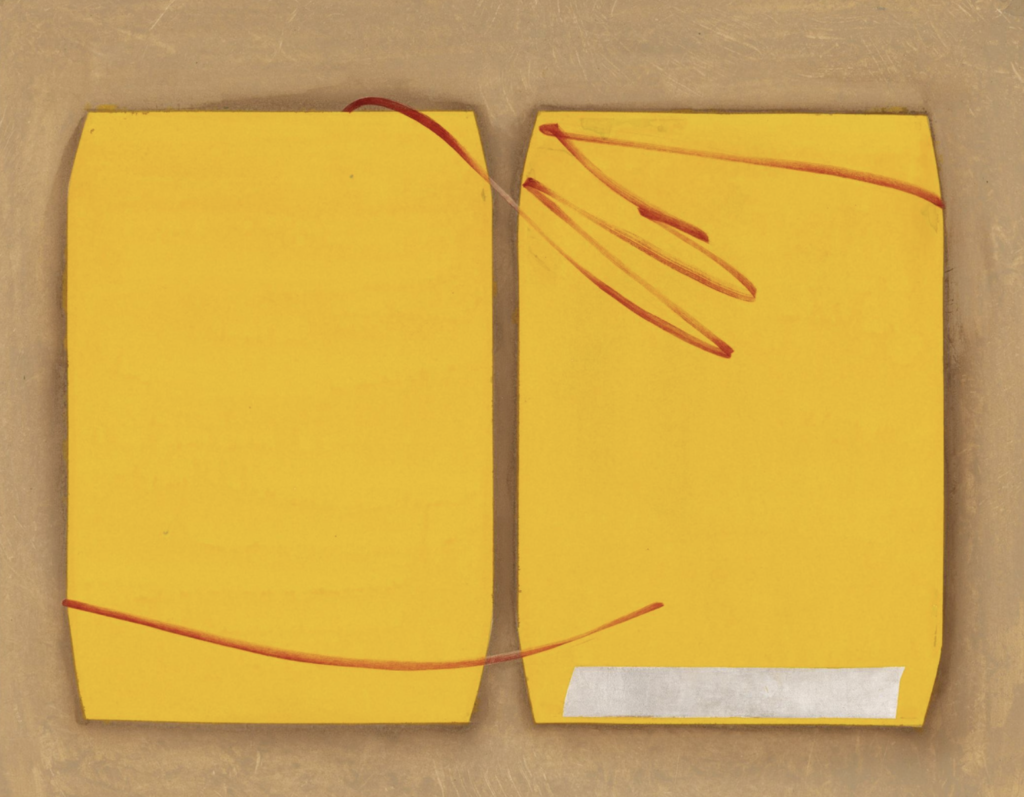
Visually, the bold yellow and blue forms in your paintings are very striking and minimalist. Could you talk about the reality behind these colors and forms?
In this series, the yellow and blue paintings are a study of how conflict can colonize the most mundane parts of our lives.
The yellow paintings depict the common water gallons and the blue paintings focus on the plastic drums that you see everywhere. these are just containers, objects of utility used for storage or carrying water. They were symbols of the home.
However, as conflict became part of the landscape, the meaning of these everyday objects began to shift. They started to carry a sense of danger because they were being repurposed to create improvised explosive devices. Gradually, something that was once familiar and safe became uncertain and threatening.
By painting them in a still life format, I wanted to freeze that tension. At first glance, the viewer sees a simple, neutral object. But as you look closer, you realize you are seeing the architecture of fear. I am interested in that psychological transformation, how an environment of conflict changes our relationship with the world, where even the most basic objects of survival begin to carry memories of unpredictability and violence.