
Alexander Knysh is Professor of Islamic Studies at the University of Michigan, Ann Arbor, USA, and Principal Investigator in the interdisciplinary Program in the Study of Mysticism, Tampere University, Finland. His academic interests include Islamic mysticism (Sufism), Qur’anic studies, the history of Muslim theological, philosophical and juridical thought, and modern Islamic/Islamist movements in comparative perspective. His recent research project, supported by a grant of the Templeton Religion Trust and the Program in the Study of Mysticism (Tampere University, Finland), examines the sacred geography of Yemen with special reference to worship of “God’s friends” or “saints.” Alexander Knysh has numerous publications on these subjects, including twenty authored and edited books. He serves as Sectional Editor for “Sufism” on the editorial board of the Encyclopaedia of Islam, Third Edition (Brill-De Gruyter) and Executive Editor of the Brill-De Gruyter book series Handbook of Islamic Mysticism.
Looking at the history of Sufism, there has always been a tension between asceticism (zuhd) and the ambition to transform the world. Would you say that Sufism is, in its essence, an inward-turned ethic, or a structure that intervenes in the world?

There are many different strands within Sufism. The duality you mention can be described as “world-renouncing” and “world-engaging.” Sufis can be otherworldly-oriented recluses or active preachers seeking to make this world a better place. The latter type has been prevalent, especially after Sufism became institutionalized in the thirteenth century CE. However, the former strand of Sufi piety has persisted as well in various forms, reflecting differences in natural human inclinations (some of us prefer company, others—solitude). Because world-renouncing ascetics and mystics had fewer students and were averse to writing down their teachings, not to mention building institutions to preserve their legacy, this group was, and still is, a minority.
The influential German sociologist Max Weber (1864–1920) classified Sufism as an “orgiastic, contemplative, world-renouncing” attitude to life, sharply separating it from what he called “inner-worldly asceticism” — the kind of religiosity, exemplified for him by Calvinism and its “Protestant ethic,” which, in his view, actively strives to reform the world. In my opinion, this is a problematic dichotomy that reflects Weber’s limited familiarity with Sufism’s original texts. My years of research into the history of Sufism have convinced me that both pre-modern Sufis and their present-day successors were intimately familiar with the predicament of being in the world while simultaneously striving to transcend it through the contemplation of God — for even the seeker conversing with God in his “heart of hearts” (sirr al-sirr) occasionally had to leave his spiritual retreat (khalwa) in order to earn his livelihood.
Al-Ghazali, in his magisterial book “Revival of Religious Sciences” (Ihya’ ‘ulum al-din), argues that abandoning the world altogether is, in fact, far easier for the Sufi than remaining in society and struggling against his soul (nafs) amidst the abuse, ridicule, and moral faults of ordinary people. In other words, escaping from mundane life is less meritorious in God’s eyes than living it. Therefore, the taming of one’s soul with its animal-like drives and instincts to secure one’s salvation is best achieved in the crowd, not in solitude. In short, my answer is this: the essence of Sufism is neither purely inward-oriented nor purely outward-oriented. The tension between these two attitudes to life has been continuously negotiated throughout Sufism’s long history and cannot be reduced to a single formula. I discuss this negotiation in my chapter “Internal Peace versus Being in Society: Sufi Dilemmas,” published in the collective volume edited by my colleague Juan Cole in 2022. An expanded Russian version of this chapter entitled «Уход в себя или жизнь в миру: суфийская дилемма» will be published this year (2026) in the volume dedicated to my colleague Alexey Khismatulin.
In the early period, futuwwa and Sufism were terms often used interchangeably. Over time, these two strands diverged—Sufism evolved toward the pursuit of truth (haqiqa), while futuwwa evolved toward social order. Can we read this divergence as a disruption of the balance in Islamic thought between truth and order, between ontological purification and social practice?
I have already addressed various strands of Sufi tradition. The majority opinion among the Sufis is that one can remain actively involved in mundane life without sacrificing one’s quest for truth and God.
Futuwwa communities were confined to Persia (especially Khurasan) and Eurasia. We do not find them in the Maghreb and the Arabian Peninsula, although some analogous structures may be identified there as well. In my opinion, futuwwa can be construed as a regional phenomenon confined to territories under Iranian/Persian cultural influence. Besides, according to one of the principles of the global Sufi brotherhood Naqshbandiyya, one can pursue spiritual goals and seek contact with God without abandoning one’s social responsibilities. In short, the generalization in the question seems too broad to me to be accepted at face value. However, as any broad statement, it has some truth to it.
Why did futuwwa rise in Khorasan and Central Asia?

The Swiss scholar Fritz Meier (1912–1998) carefully examined the regional ascetic and mystical movements in the eastern lands of Islam, Khorasan in particular. He argued that the first Sufi organizations appeared there in the fourth/tenth century, and he attributed this phenomenon to the specificity of the region. Khorasan had a highly developed pre-Islamic urban culture, and the ruler of Iran, the shahanshah, governed these urban communities with an iron fist, so to speak. To protect themselves from the overbearing power of the Iranian state, the urban population — what we would today call craftsmen and merchants, the people of the bazaar or suq — sought to organize themselves, and they did so by forming small militias. According to Meier, out of this pre-Islamic Iranian background there arose clubs of young men: the fityan who practiced a special code of behavior (futuwwa).
These young men initiated newcomers into their ranks through a special ceremony; they engaged in physical exercises, wrestling in particular; they bred homing pigeons, which they used to send messages to one another; and they had a special dress code that distinguished them from the rest of the population. They also cultivated generosity and altruism — placing the concerns of others before their own, which Sufi textbooks call ithar. They carried weapons, too: slings and daggers, to defend themselves and to protect the quarters of their city. Urban space in Islamic cities was divided into quarters that were closed at night and guarded by armed men, and these young men functioned as protectors of their neighbors. At some point, however, they also began to extract money from the population. Probably in order to ennoble their activities, they got in touch with Sufi groups — that is, with ascetics and mystics. One may suggest that at some point these clubs of young men joined forces with local Sufi groups. Sufism provided the spirituality they lacked by presenting Sufi virtues and the virtues of futuwwa. This development can be tentatively dated to the late tenth century CE. It crystallized in the eleventh century that witnessed the rise of the first Sufi lodges.
In that early period, was there a serious tension between futuwwa and Sufism?
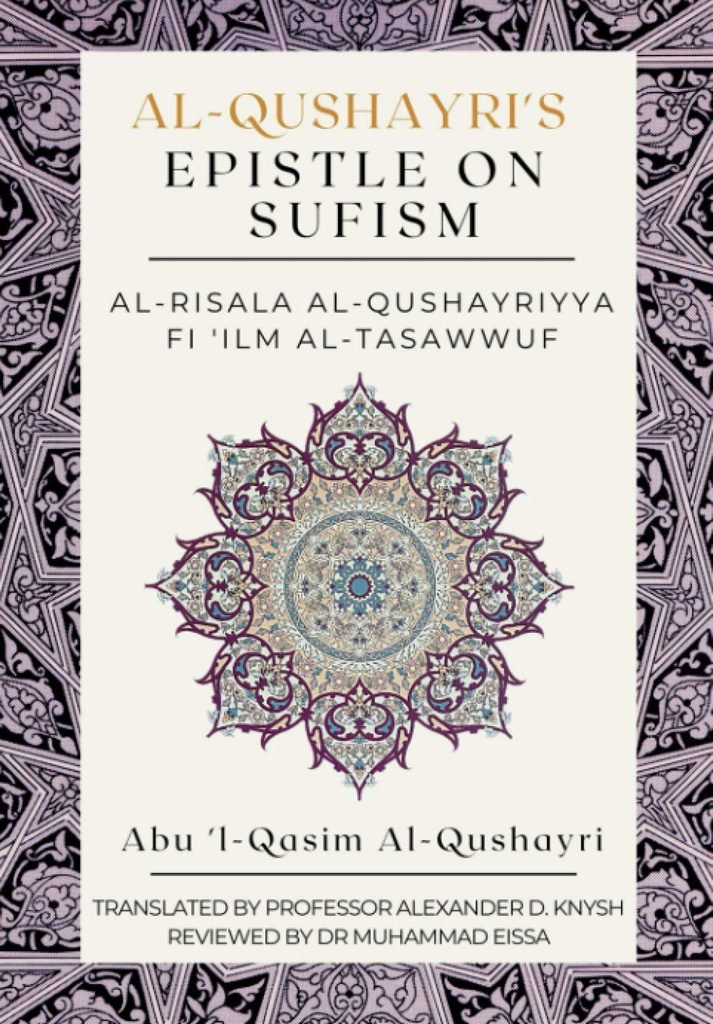
If you read my translation of al-Qushayri’s Epistle on Sufism, you will see that futuwwa groups are portrayed there very sympathetically. Al-Qushayri was an Arab, but his mother was probably Persian, so his mother tongue was Persian; he used Arabic much as Europeans used Latin, as the language of high culture. He himself was trained as an archer and a horseman, and only later did he turn to Sufism at the hands of Abu ‘Ali al-Daqqaq, a Sufi master who held what was called majlis al-dhikr, an assembly for recollecting God’s name and preaching. In al-Qushayri’s book there is no sharp opposition between tasawwuf and futuwwa. They seem to go hand in hand. Al-Qushayri gives several examples of fityan performing “miracles” of generosity and altruism: when one of them invited guests to his house, he would slaughter the last animal he had had just to feed the guests and his neighbors as well. For al-Qushayri, this as an act of selflessness—a value advocated by both tasawwuf and futuwwa.
Al-Qushayri’s teacher, Abu ‘Abd al-Rahman al-Sulami, was likewise an Arab, though Persianized. Both belonged to the highest strata of society being descendants of the Arab conquerors of Persia. Al-Sulami wrote a special treatise on futuwwa in which he portrayed it very favorably. Thus, the classics of Sufi literature based in Khorasan and other Persian provinces were favorably disposed toward futuwwa. Because their works were widely read and taught — in the east all the way to the Caucasus and Central Asia, and in the west as far as al-Andalus (Islamic Spain) — the concept of futuwwa as a positive, desirable model of behavior spread across the entire Muslim world. Its place of origin, however, remained in Khorasan, and the city of Nishapur in particular, and possibly also Rayy, a city located close to present-day Tehran.
Some scholars argue that futuwwa is a kind of hidden vein within Sufism, one that comes to the surface in extraordinary times such as disaster or collapse. Do you agree with this thesis?
I think it makes sense. But if you look at the history of the Muslim world you can perceive it a series of crises with occasional periods of peace and prosperity. Among those who used futuwwa to strengthen Muslim society was Shaykh Shihab al-Din ‘Umar al-Suhrawardi (1145–1234), who sought to support the caliph al-Nasir li-Din Allah, the last effective caliph of the ‘Abbasid dynasty that was destroyed by the Mongols in 1258. In the early decades of the thirteenth century the caliphate had become a shadow of its former self, and al-Nasir wanted to revive it by any means available to him. He turned to a very effective preacher who happened to be a Sufi — al-Suhrawardi. Al-Suhrawardi, who hailed from the province Jibal in Persia and was familiar with local futuwwa communities decided to create similar organizations in Baghdad. He sponsored these clubs of young men, who wore distinctive garments, trained homing pigeons, and practiced special initiation rites. For al-Suhrawardi, futuwwa was indeed a way to strengthen al-Nasir’s caliphate at a time of crisis. His strategy proved effective for a short while, but failed to save the caliphate that was destroyed by the Mongols in 1258.
Al-Suhrawardi’s uncle, Abu al-Najib al-Suhrawardi, founded the Suhrawardiyya order and wrote the treatise Adab al-muridin, which codified the rules of conduct within Sufi communities. Abu al-Najib’s nephew was so close to the caliph that he became the caliph’s diplomatic envoy: he was sent to Anatolia, to the Seljuk sultan ‘Ala’ al-Din Kayqubad (reigned 1220–1237), and later represented the caliph before the Mongols. In retrospect we can see that ‘Umar al-Suhrawardi’s efforts failed, since the Mongols were intent on conquering the caliphate’s lands and no diplomacy could prevent them from doing so.
The historical context you mention is important. Futuwwa can be construed as a way of resisting outside threats, and sometimes inside threats as well, when rulers would become overbearing and unjust. This happened wherever central authority disintegrated, collapsed, or became too oppressive. In the latter case, resistance could take on the form of futuwwa, with urban masses organizing themselves on their own. We might call it a form of civil resistance and even argue that in futuwwa we are dealing with the beginnings of a Muslim civil society. Fritz Meier even traced it back to pre-Islamic times by considering Khorasan the birthplace of both futuwwa and Sufi organizations.
Some scholars read futuwwa as an Islamic reworking of the Roman professional associations. In Turkey, the Ahi tradition is a particularly complex subject: some see it as a kind of guild or trade union, others as a Sufi order. How should we approach it?
We learn about Ahis from the North African traveler Ibn Battuta who met them in Anatolia around the middle of the fourteenth century Common Era. For him, they were similar to Sufis, because they behaved like Sufis and accepted him as one of their own — Ibn Battuta, too, was a Sufi who often stayed in Sufi lodges during his travels in Asia and Africa. His account is valuable precisely because he observed the Ahis as an outsider.
One more thing we should not forget. While you focus on futuwwa and tasawwuf, the craft guilds were important too. Guilds were an important social force in Europe. Some historians even argue that they formed the foundation of civil society. The craftsmen and artisans had their own internal rules or constitutions, and, like futuwwa clubs, they admitted new members through special initiation ceremonies. Members of futuwwa clubs were also craftsmen: potters, shoemakers, locksmiths, cobblers, tanners, blacksmiths and so on. They were professionals and, like professionals today, they wanted to protect their businesses. When the government turned out to be ineffective, they used their own resources and manpower to protect their business interests from excessive taxation by military commanders as well as from thieves, robbers and highwaymen, and so forth.
Therefore, it would make more sense to speak not about a duo but a trio: craftsmen, futuwwa clubs, and Sufi organizations. Al-Qushayri speaks about his fellow Sufis as “this community” [of ours] hadhihi al-ta’ifa. He also speaks of members of futuwwa whose. The professional names of both Sufis and fityan may indicate that they were also members of craftsmen’s guilds who supported themselves by their labor and were not a burden on society. They wanted to preserve their dignity, often in the face of oppression and extortion, to have their property and their businesses protected and their voices heard.
Has Sufism’s long-standing entanglement with political power compromised its spiritual autonomy, or, conversely, enabled its historical continuity?

I have provided some tentative answers to this question in my previous historical accounts of Sufis (Islamic Mysticism and Sufism: A new history of Islamic mysticism). More recently, I discussed this issue in my book Islam Historical Perspective (3rd edition, Routledge, Taylor and Francis, 2025). In my view, the entanglement you mention is not unidirectional, but mutual — on one hand, support by powers-that-be secured Sufism’s institutional continuity and flourishing. On the other, this support made Sufis dependent on state donations, which curtailed their autonomy. One reason the Baghdad school of Sufism eclipsed rival regional trends such as the Malamatiyya and the Karramiyya was that rulers found the urban, quietist, middle-class Sufism more “manageable” than its counterparts and started to patronize it — yet this same closeness to the state paved the way for Husayn b. Mansur al-Hallaj (d. 922) to become a casualty of court intrigue and be executed. A similar picture emerges under the Safavids: the Nurbakhshiyya Sufi order was viewed as a threat by both Sunni and Shi‘i rulers because of its messianic claims, while the Ni‘matullahiyya flourished for a time due to its ties with the Safavid court, only to fall out of favor after one of its masters took part in a rebellion. Some of its shaykhs were later assassinated on the orders of the jurist Muhammad ‘Ali Bihbahani (1731–1801), tellingly nicknamed the “Sufi-Killer.”
Today, many states in the Muslim world patronize Sufi institutions to counterbalance the perceived or real Salafi “threat.” However, this state strategy discredits Sufis in the eyes of the masses, who may come to view them as stooges of manipulative secular regimes. Sufism’s closeness to state authorities pushes people toward Salafi groups — which is why contemporary Sufi leaders must tread very carefully so as not to appear as uncritical and docile endorsers of the ruling establishment. In other words, closeness to state authorities may become the proverbial “kiss of death” to Sufis eager to cooperate with the ruling establishment or simply joining it. In summary, relationship with political powers has assured Sufism’s institutional and numerical growth as well as geographic expansion. However, it has also resulted in Sufism’s loss of material and spiritual autonomy and, occasionally, cost it social legitimacy and prestige.
In a landscape where traditional Sufism has largely grown passive, is it sufficient to explain the rise of Salafi movements solely through the lens of “radicalism,” or can this be read as a reaction to the fractures of modernity? Can such a reaction be linked to Sufism’s concept of “futuwwa,” or does Salafism define itself from an entirely different conceptual world?
Yes, Salafism can be seen as a social-political reaction to the “fractures of modernity,” but the same may be said about some movements within Sufism, especially some reform-minded Sufi brotherhoods and followers of different versions of Neo-Sufism. Like Salafism, Sufism can be backward-looking and conservative, but it can also be futuristic and serve as a vehicle of reform (see the works of Itzchak Weismann and some other experts on modern-day Sufism). There are reform-minded Salafis (e.g. the Muslim Brothers) and conservative, apolitical Salafis, e.g. followers of Shaykh Muqbil al-Wadi‘i (1933–2001) in Yemen and many ‘ulama’ in Saudi Arabia, especially the so-called Madkhalis/Madkhaliyya). The split between Sufism and Salafism, to some extent, can sometimes be conceived as a Muslim version of the confrontation between the Catholics and the Protestants in early modern Christendom. This comes to the fore in the Sufi-Salafi debates over the cult of God’s friends (awliya’) and their tombs.
As for linking this reaction to modernity (whatever this term may imply) to the institution of futuwwa, the Salafis I am familiar with do not usually call each other “young man/men” (fata/fityan). Since the rise of the conservative reform movement launched in eighteenth-century Central Arabia by Muhammad Ibn ‘Abd al-Wahhab (see Chapter 21 of the third edition of my Islam in Historical Perspective, New York and London: Routledge, 2025), they have generally referred to themselves as “brothers” (ikhwan or ikhwa). In my opinion, this fact suggests that the term futuwwa does not reflect Salafis’ own vision of themselves. There are, moreover, at least three types of Salafis: missionary Salafis (salafiyya da‘wiyya, also called salafiyya ‘ilmiyya or shaykhiyya); politically active Salafis (salafiyya munazzama or harakiyya, also known as salafiyya sururiyya); and jihadi Salafis (salafiyya jihadiyya). These strands of the Salafiyya movement, aptly described by Laurent Bonnefoy in his book Salafism in Yemen) are as different from one another as they are from the Sufiyya. The Salafis who revere their teachers (shaykhs) and follow their rulings to the letter are similar to Sufis who unquestioningly obey their shaykhs.
Are there structural points of contact between Sufism and Salafism? Is it a meaningful line of inquiry to look for such connections?
Yes. It is a fairly well-known fact that some conservative Sufis behave and even dress like Salafis, and vice versa. Some Islamologists even talk about “Sufi Salafis.” Let’s start with the reformist Salafis. The first figure who comes to mind is Hasan al-Banna (1906–1949) in Egypt. He studied with Sufi shaykhs. Impressed by the figure of the Sufi spiritual guide (murshid) and the loyalty of his followers, he recognized the effectiveness of Sufism providing moral guidance to young men and women. What he disliked about Sufism was its otherworldly orientation. Al-Banna wanted his organization to abandon the Sufi rejection of the world and become actively engaged in the struggle against British imperial rule over Egypt and the Westernization of Egyptian society it promoted. His preferred strategy was education and political struggle, which the Sufis of his time sought to avoid in order not to be distracted from quest for spiritual and moral perfection (ihsan). As a consequence, al-Banna’s Muslim Brotherhood became a political party in all but name. At the same time, al-Banna retained the Sufi structure he had learned while studying under Sufi teachers. His organization was headed by a council of elders, and he himself was styled murshid. Even today, the leader of the Muslim Brotherhood in Egypt is called al-Murshid al-‘Amm.
As already mentioned, today’s Salafis are diverse. As I said, besides politically active Salafis, there are those who reject any involvement in political struggle. This is a very convenient position from the point of view of many governments, including the rulers of Saudi Arabia. The Kingdom would suppress political activism of any kind, whether it is called Sufism, Salafism, or Kharijism. For such states, apolitical Salafism is a boon; its leading figure in Saudi Arabia, Rabi‘ al-Madkhali (1933–2025), gave his name to this conservative current among ‘ulama’ of the Arabian Peninsula and beyond. In Yemen, Muqbil al-Wadi‘i, whom I have mentioned earlier, argued that the Muslim Brotherhood, by acting as a political party, had betrayed the principles of original, apolitical Salafism. He mockingly called them al-Ikhwan al-Muflisin, “the bankrupt brothers.” Preachers like Muqbil al-Wadi‘i and al-Madkhali were supported by the Yemeni and Saudi states, and would be welcome in Kuwait and the United Arab Emirates, precisely because they do not meddle in politics. State authorities across the Muslim world are much more concerned about the jihadi Salafis, who emphasize the role of jihad in the creation of the first Muslim state in Medina. They argue that the Prophet was a warrior who was himself wounded on the battlefield. Therefore, to follow him is to practice jihad. According to one Egyptian political activist, jihad is “the neglected duty” (al-farida al-gha’iba), a kind of sixth pillar of Islam. Unlike the Sufis, who encourage inner jihad, or jihad of the soul, they call for an external, armed jihad. The majority of Salafis, however, are not proponents of violence. They seek to re-Islamize society. In their view, when a Muslim community departs from the original principles of Islam, it becomes amoral and idolatrous, which renders it incapable of resisting outside threats that the Muslim world faces today.
This does not mean that armed struggle was alien to Sufism. In the nineteenth century, most of the anti-colonial struggles were led by leaders with Sufi affiliations. One of the most dramatic examples is the Emir ‘Abd al-Qadir (Abdelkader), whose father headed the Qadiriyya Sufi brotherhood in what is today Algeria. This Sufi-based movement was committed to external jihad against the French. When it was defeated, ‘Abd al-Qadir was imprisoned in France, then sent into exile to Bursa and later to Damascus. No longer able to wage an external jihad, he immersed himself in reading the famous Sufi writer Ibn ‘Arabi (1165–1240), became a prominent interpreter of his works, and asked to be buried next to Ibn ‘Arabi’s tomb in Damascus. After gaining independence, the Algerian authorities needed a great national hero, so they exhumed ‘Abd al-Qadir’s body, violating his wishes, and carried it back to Algiers. His statue now adorns a square in the center of the Algerian capital, provoking controversy, because the erection of statues is seen by some Muslims as an act of idolatry.
Other leaders of resistance against the French and the British also had Sufi connetions, for example, al-Hajj ‘Umar, the leader of the Tijaniyya; the Mahdi of Sudan; and the so-called “Mad Mullah” of Somalia. At the same time, other African Sufis cooperated with the colonial powers — the head of the Tijaniyya Si Ahmed Tidjani in Algeria even married the French woman Aurélie Picard, who became known as the “Princess of the Sands.” It is, therefore, difficult to make broad generalizations. In my books I argue that a great deal depends on the personalities of Sufi leaders: some were militant, other peaceful.
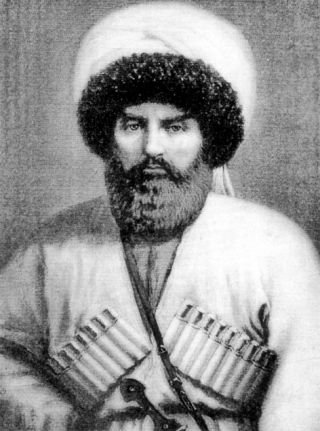
In the Caucasus we find the famous residence leader Shamil who was a follower of the local branch of the Naqshbandiyya. His real name was Shamwil — Samuel. However, in Russian and even Muslim documents was he renamed Shamil. He was an Avar, one of the largest nationalities of Dagestan, not a Chechen, although one his wives was Chechen. He used Arabic in his correspondence and memoirs, since Arabic, along with Azeri Turkish, was the lingua franca of that region, because a different language was spoken in every valley. After his capture, the tsar spared his life; he was paraded across the Russian Empire and then exiled to Kaluga, near Moscow. Later he was allowed to perform the hajj, was received by the Ottoman sultan on his way, and died and was buried in Medina. All these resistance leaders had Sufi connections, whether Salafis like it or not
One must point out that the Sufis who led jihads against colonial powers used the Shari‘a, not Sufi precepts, to mobilize their people. In the Caucasus, each ethnic group — Chechens, Ingush, Kumyks, Lezgins, and so on — had its own customary law (‘adat) that often was quite different from the Shari‘a. How can one unite these diverse groups in the face of formidable outside threat? One could begin to enforce the Shari‘a and to tell one’s followers to abandon their ‘adats. For example, Shamil strictly forbade his followers to drink wine — there was a major campaign against wine in Shamil’s imamate. He also prohibited the mixing of men and women during various celebrations. ‘Abd al-Qadir did the same in Algeria. One can say that he was more an enforcer of the Shari‘a than a Sufi guide. Note that insisting on the strict fulfilment of the Shari‘a is a hallmark of Salafi belief and practice. That’s where we see convergence of Sufism and Salafism. It is important to point out that Sufi discipline demanded complete obedience to the will of the shaykh, which is very suitable to military campaigns. The fighters often into battle believing that the shaykh’s blessing (baraka) would protect them from the enemy’s bullets and cannon. One vivid example is the Qadiri shaykh Kunta Hajji (1800–1867) of Chechnya, whose followers attacked Russian troops armed only with daggers.
Today, many Salafis try to downplay Sufi connections of leaders of anti-colonial jihad. Those who acknowledge Shamil’s military achievements tend to minimize his Sufi credentials. Admittedly, he was a murid, not a shaykh, and he disobeyed his own teacher, Jamal al-Din al-Ghazi-Ghumuqi, who told him not to fight the Russians because he would lose anyway. However, Shamil did study under his shaykh and sought his advice. He also read Sufi works and practiced khalwa, spiritual retreat, which is well documented in the memoirs of his Russian captives.
References
Ibn Battuta. The Adventures of Ibn Battuta: A Muslim Traveler of the Fourteenth Century. Trans. and commentary by Ross Dunn. Berkeley: University of California Press, 2012, chapter 7.
Knysh, Alexander D. “Internal Peace versus Being in Society: Sufi Dilemmas.” In Peace Movements in Islam: History, Religion, and Politics, edited by Juan Cole, 63–78. London: I.B. Tauris, 2022.
Knysh, Alexander D. Islam in Historical Perspective. 3rd ed. New York and London: Routledge, 2025.
— Chapter 13, “Ascetic and Mystical Movement in Islam: Sufism,” pp. 272–304.
— Chapter 21, “Renewal and Reform in Islam: The Emergence of Islamic Modernism and Reformism,” pp. 471–498.
— Chapter 22, “Islam as a Political Force and Vehicle of Opposition,” pp. 503–538.
— Chapter 24, “The Ideology and Practice of Globalized Jihadism,” pp. 571–.
Knysh, Alexander D. Sufism: A New History of Islamic Mysticism. Princeton: Princeton University Press, 2017.
Knysh, Alexander D. Islamic Mysticism: A Short History. Leiden and Boston: Brill, 2000; 2nd ed. 2010. (Translated into Turkish, Russian, and Uzbek.)
Knysh, Alexander D. «Уход в себя или жизнь в миру: суфийская дилемма». In a volume dedicated to Alexey Khismatulin. Forthcoming, 2026.
Meier, Fritz. Essays on Islamic Piety and Mysticism, trans. John O’Kane. Leiden: Brill, 1999, 189–219.
al-Qushayri, Abu al-Qasim. Al-Qushayri’s Epistle on Sufism. Translated by Alexander D. Knysh. Reading: Garnet Publishing, 2007.
al-Sulami, Abu ‘Abd al-Rahman. Kitab al-Futuwwa. Cited by Knysh; see, e.g., The Book of Sufi Chivalry, trans. Tosun Bayrak. New York: Inner Traditions, 1983.
Weismann, Itzchak. Cited by Knysh regarding Sufism as a vehicle of reform; see, e.g., Itzchak Weismann, The Naqshbandiyya: Orthodoxy and Activism in a Worldwide Sufi Tradition. London: Routledge, 2007.
Dear Eren,
Many thanks for the interview! The questions you posed were great indeed! It was a pleasure to talk to you about our shared fascination with Sufism and its various representatives. Gratefully, A.K.