Taro Yamamoto: Traditional Japanese art is trove of ideas hidden within traditional works that they can incorporate into their own creations
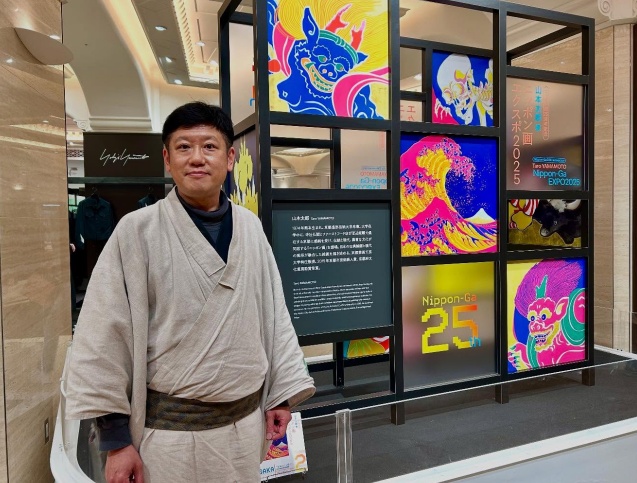
We conducted an insightful interview with Taro Yamamoto, the artist and academic who developed the ‘Nippon-ga’ style by reinterpreting traditional Japanese painting through a modern lens; we had an in-depth conversation with him, ranging from the origins of classical Japanese aesthetics to historical transformations and the future of traditional art in the contemporary world.
To begin, could you please introduce yourself and tell us about your artistic and/or academic background? How did your engagement with traditional Japanese painting begin?
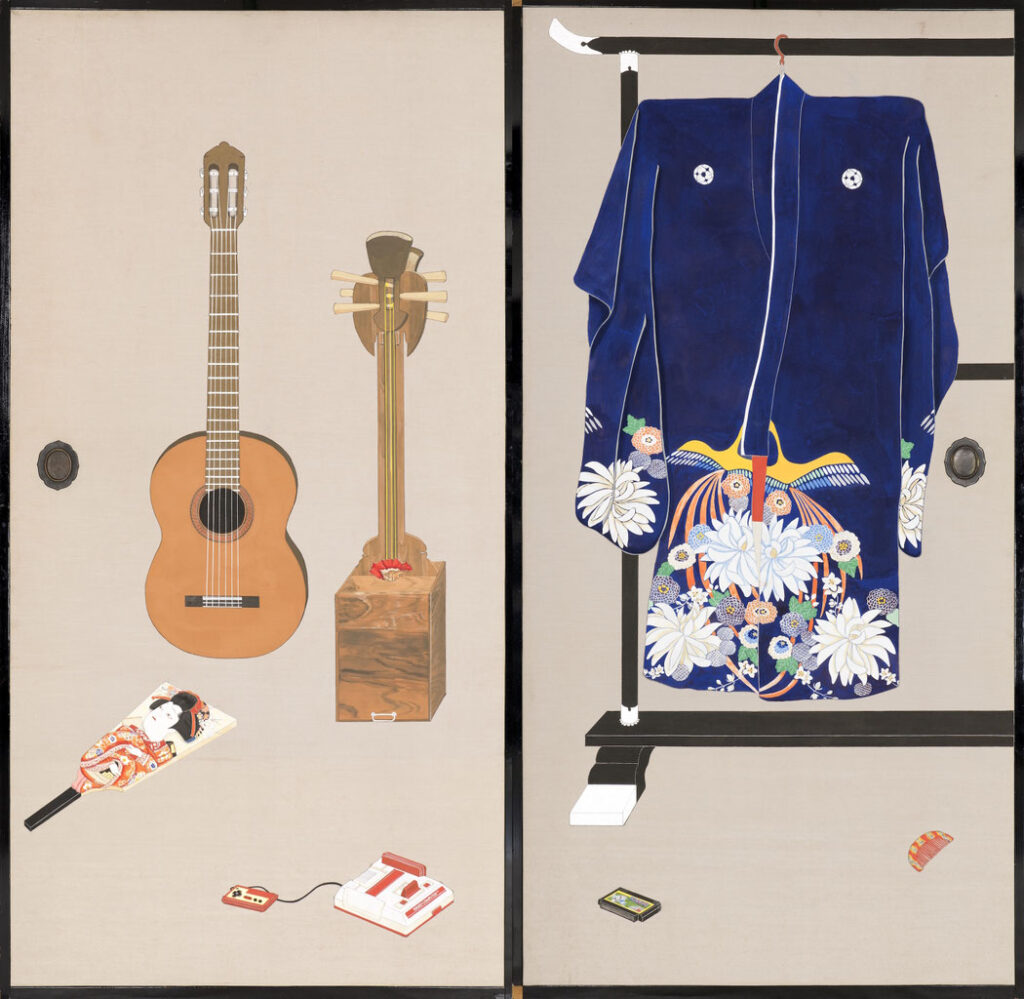
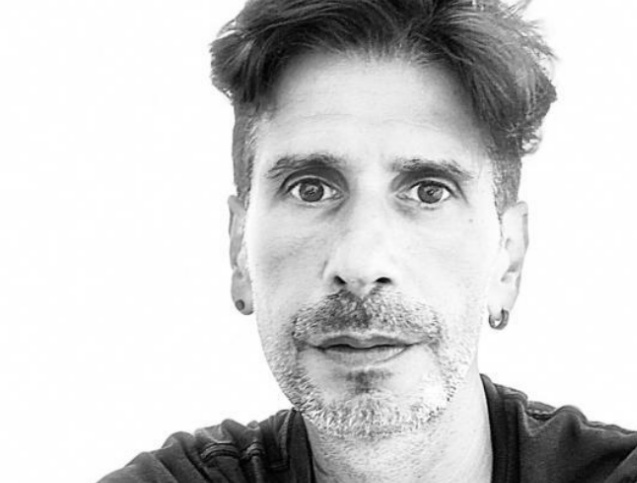
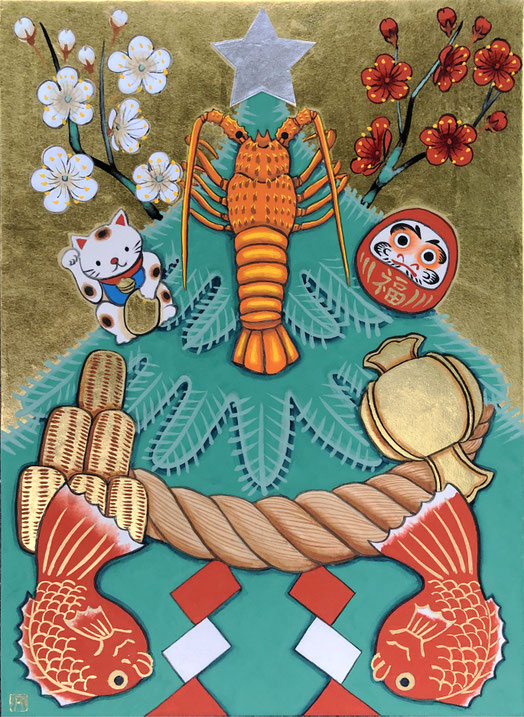
Japanese mineral pigment on silk with silver leaf.Taro Yamamoto (Photo: by Yu Kusanagi)
My name is Taro Yamamoto. Currently, I am creating paintings in the field of contemporary art that update traditional Japanese painting. I also teach at Kyoto University of Arts and Crafts.
I graduated from Kyoto University of Art and Design in 2000. My major was Japanese painting. After that, in 2013, I began working as an associate professor at Akita University of Arts, and from 2018, I moved to Kyoto University of Art and Design, where I studied, and worked there as an associate professor as well. Since 2022, I have been working at my current university, Kyoto University of Arts and Crafts.
I began seriously studying traditional Japanese painting when I entered university in 1996. Kyoto is a city where traditional culture still thrives. It was extremely meaningful for me to be able to begin studying traditional Japanese painting in this place.
In 1999, I created a new genre called “Nippon-ga,” a modern update of traditional Japanese painting, and began creating art in this style. While traditional Japanese painting is usually called “Nihon-ga,” I deliberately pronounce it “Nippon-ga” to distinguish it as a similar but distinct genre.
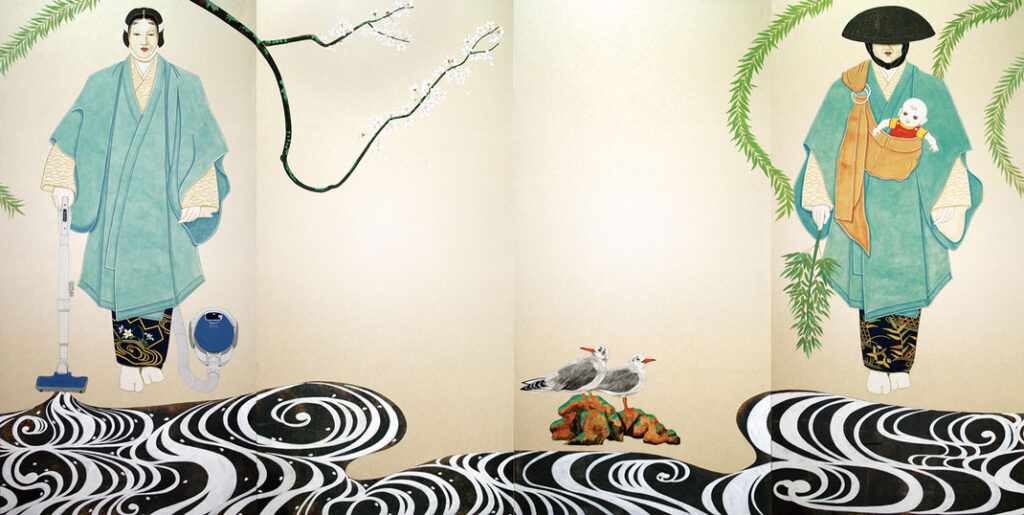
1999 yılında, geleneksel Japon resminin modern bir güncellemesi olan “Nippon-ga” adını verdiğim yeni bir tür ortaya koydum ve sanatsal üretimlerimi bu tarzda gerçekleştirmeye başladım. Geleneksel Japon resmi genellikle “Nihon-ga” olarak adlandırılsa da, ben bunu benzer ama farklı bir tür olarak ayrıştırmak amacıyla bilinçli olarak “Nippon-ga” şeklinde telaffuz ediyorum.
How would you define the theoretical foundations of traditional Japanese painting? In particular, what can you say about the aesthetic and philosophical background of Nihonga, Yamato-e, and other related styles?
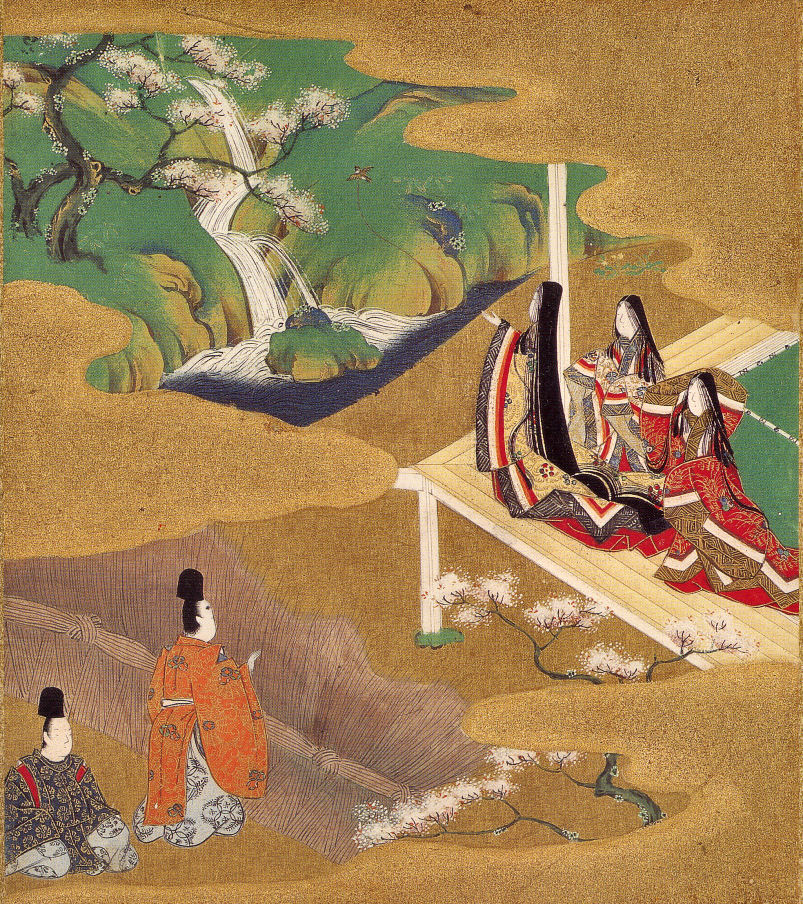
Broadly speaking, traditional Japanese painting can be considered part of the painting styles that developed in East Asia. Not only in cultural aspects like painting, but also in political systems, ancient China was a very advanced country in East Asia.
Traditional Japanese painting developed under the influence of other East Asian countries, especially China. The older the history, the stronger the Chinese influence becomes, not only in materials and techniques, but also in the subject matter of paintings. However, gradually, paintings that were not solely influenced by China emerged. That is Yamato-e.
While Yamato-e painting retained materials and techniques not significantly different from those of East Asia as a whole, its motifs shifted to stories from classical Japanese literature, and its style became distinctly Japanese, featuring rounded forms and a gentler, more fluid aesthetic. The cute, rounded character designs often seen in modern Japanese subculture may also trace their roots back to Yamato-e.
Later, the Rinpa style emerged from Yamato-e. This style, said to have begun around the 15th century, was started by the townspeople of Kyoto. Before Rinpa, painting was strongly linked to the ruling class, such as the court nobility and samurai, as well as religious institutions like temples and shrines.
Rinpa, born from the influential common people living in Kyoto, a city that had gained economic power after major wars, can be considered the first example of the democratization of art in Japan.
Compared to Chinese painting, traditional Japanese painting, including Rinpa, tends to be more emotional and narrative. Furthermore, it often deliberately avoids explicitly stating the narrative, instead allowing the viewer to use their imagination.
The deliberate concealment of the subject is an interesting characteristic sometimes seen in traditional Japanese painting. A style of screen called “Daregasode Byobu” (Who’s Sleeve Screen) was popular during the Edo period. In this style, the main figure is not depicted within the screen; instead, only the kimono the figure would have worn is shown, seemingly discarded and hanging on a piece of furniture.
There is even a style called “Rusu Moyo” (Absent Scene), where a scene from classical literature is depicted, but the figures are absent from the frame, leaving only the background. This reflects a unique Japanese aesthetic sensibility that considers depicting the main character or subject entirely to be overly verbose.
How have historical and cultural transformations (such as political shifts, contact with the West, and processes of modernization) influenced Japanese painting techniques and visual language?
Japanese painting techniques have often changed due to influences from overseas. The introduction of Buddhism from China brought fundamental painting techniques that continue to this day to Japan. Ink paintings and Buddhist paintings, primarily created using ink, showed a strong influence from Chinese painting in the early history of Japanese art.
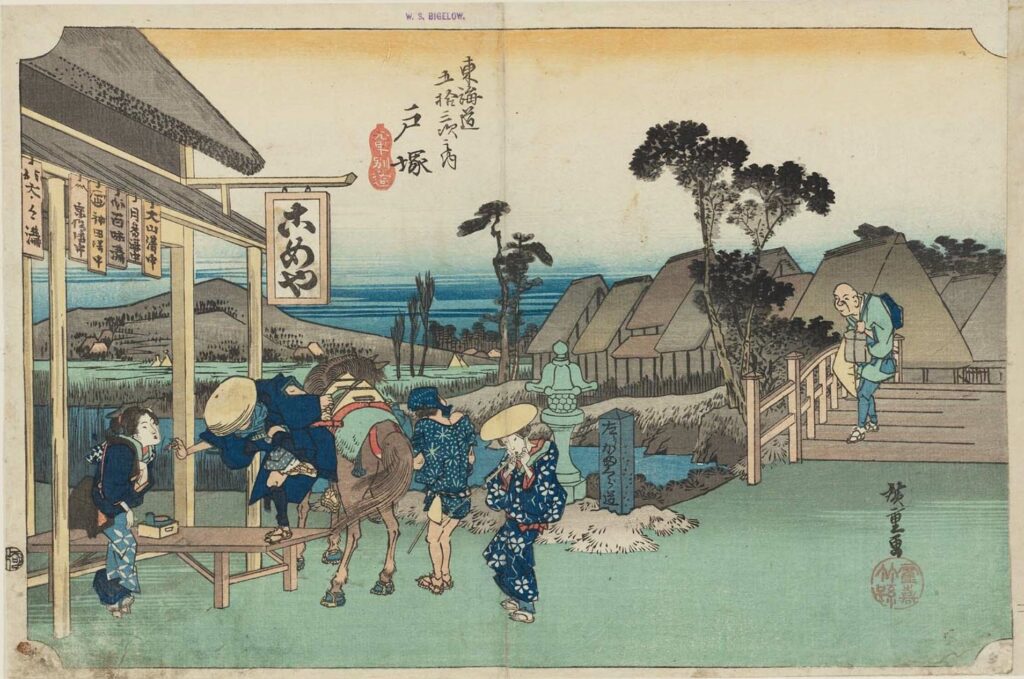
Later, Yamato-e and its successor, the Rinpa school, developed uniquely Japanese expressions. However, a major change occurred from the mid-Edo period onward, with the emergence of a group of paintings called Ukiyo-e. Ukiyo-e is characterized by its popularity and consumption among the common people of Edo, much like illustrations in modern terms. While some works were hand-painted, the most famous were primarily woodblock prints. This made them more affordable and accessible to ordinary people than hand-painted works.
Furthermore, while Ukiyo-e is considered very Japanese today, its influence from Western painting was also a factor in its popularity among the masses.
Hokusai’s world-famous “The Great Wave off Kanagawa” depicts Mount Fuji extremely small in the background compared to the large wave in the foreground. Hokusai is known to have studied Western perspective, and he created other works with extreme perspective.
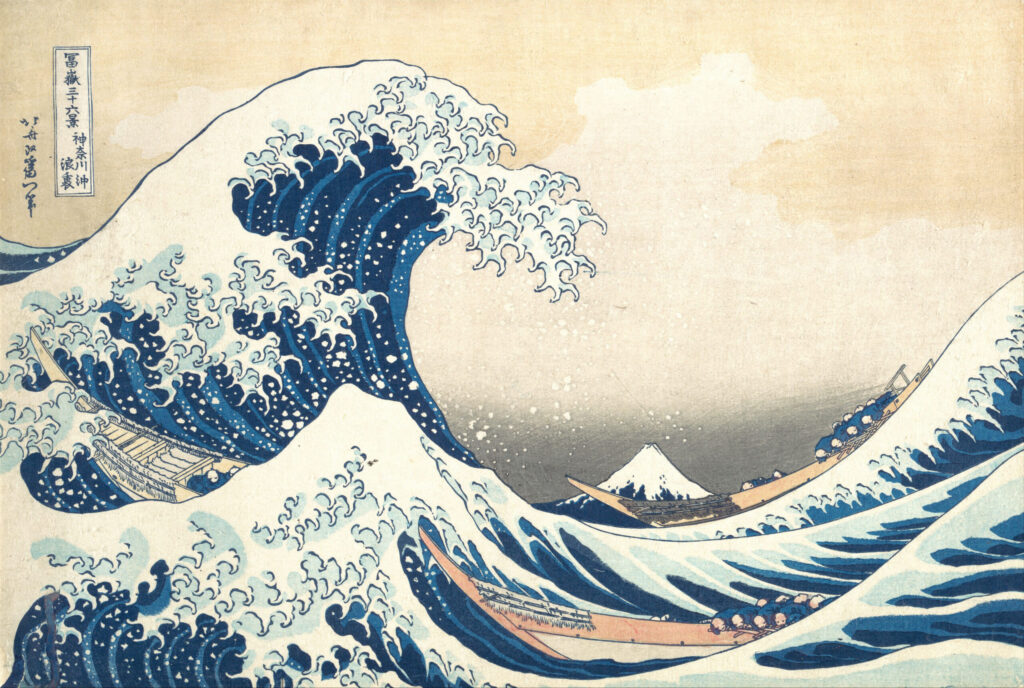
changes. The influence of modern Western painting became prominent, giving rise to “modern Japanese painting,” a style that blended traditional Japanese materials with Western painting techniques. Yokoyama Taikan is perhaps the most representative painter of this style. However, “modern Japanese painting” developed somewhat isolatedly within Japan, losing its influence on the global art world.
It can be said that Takashi Murakami’s generation changed this situation. Instead of referencing the partially Westernized “modern Japanese painting,” his style, which mixes pre-Edo period painting styles with modern subcultures such as manga and anime, has a strong presence in the contemporary art world.
When comparing Japanese miniature and scroll (emaki) painting traditions with other miniature traditions around the world (for example Islamic, Persian, Ottoman, or European traditions), what kinds of relationships or distinctions do you observe?
The relationship between the tradition of Japanese miniature painting and scroll painting and other miniature painting styles around the world.
As we have discussed so far, it would be fair to say that Chinese painting has had the greatest influence on the history of traditional Japanese painting. While I’m not sure if the term “miniature painting” is appropriate, the mandala, a graphic representation of the doctrines of Esoteric Buddhism, a branch of Buddhism, is fundamentally a product of Chinese origin.
Mandalas are pictorial representations of the structure of the Esoteric Buddhist worldview, often depicting extremely fine details. The various Buddhas depicted within regularly arranged grids and circles are geometrically precise, almost as if created by a computer.
On the other hand, picture scrolls are a format that allows for a more free-flowing storytelling experience. They rarely consist solely of images; generally, words or narratives are written first, followed by the illustrations. Furthermore, because the long horizontal screen is viewed by gradually unfolding it, it’s impossible to grasp the entire picture at once. Therefore, viewers of picture scrolls, much like those who read manga or watch anime today, enjoy the gradually unfolding story and take their time to grasp the overall picture.
How do you evaluate the position of traditional Japanese painting within contemporary artistic discourse today? In your view, what direction might this tradition take in the future?
I believe that traditional Japanese painting contains various elements that are still relevant today. For contemporary Japanese artists, there is a treasure trove of ideas hidden within traditional works that they can incorporate into their own creations.
Takashi Murakami would be a prime example of a contemporary Japanese artist whose work is inspired by traditional Japanese painting. His concept of Superflat is a comprehensive framework that can discuss pre-modern Japanese painting and contemporary Japanese subcultures such as manga, anime, and games. It was incredibly fresh when Murakami introduced it. However, Takashi Murakami is now a veteran artist, and a quarter of a century has passed since the Superflat concept was first presented.
I think it’s time for us to explore and convey a deeper understanding of Japanese art through our artwork. This shouldn’t be a rejection of Superflat, but rather a developmental evolution of it.Few works of Japanese art can be discussed in isolation; they are deeply intertwined with other genres of culture, such as classical literature. Ukiyo-e, a famous form of traditional Japanese art, is inextricably linked to Kabuki, the performing art of the time. Kabuki has a story, and it is because these stories resonate with modern audiences that the genre continues to be performed today.
Ukiyo-e and Kabuki are just a few examples, but other traditional Japanese art forms also contain stories. I believe that if we can update these works, along with the stories they contain, for a modern audience, Japanese art will become even richer..