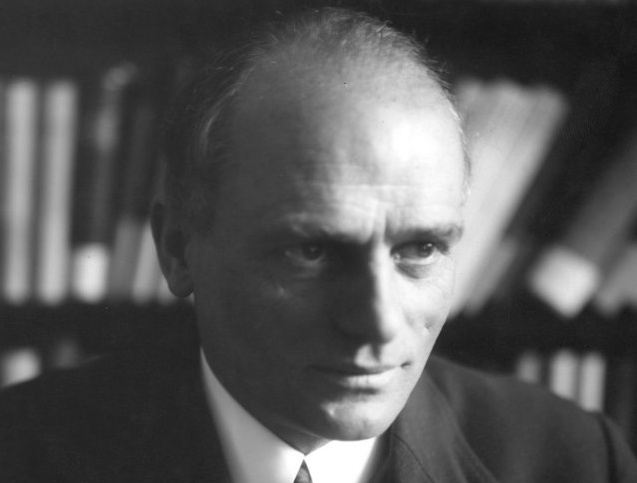
The thought of Othmar Spann, built around anti-individualist universalism and the corporative State (corporatism), constituted — together with the Spannkreis school that formed around his university chair — one of the most original and effective nuclei of the Conservative Revolution movement of the twentieth century. We conducted a wide-ranging interview with the academic Francesco Ingravalle, the Italian translator of Spann’s work Brief History of Economic Theories, focused on the depths of this intellectual legacy.
What is the theory of “universalism” (Universalismus), which occupies a central place in the philosophy of Othmar Spann? How did this theory give him an original position within the Conservative Revolution movement, distinguishing him from other thinkers?

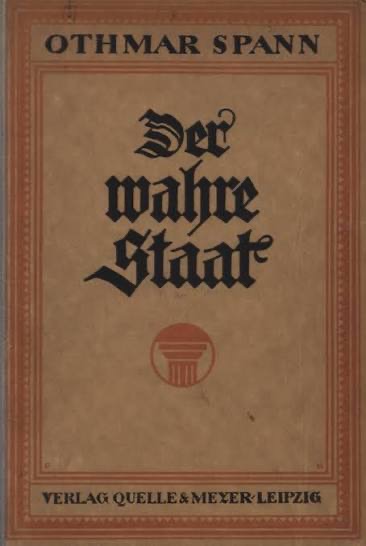
It is worth starting with an observation found in Karl Marx’s Introduction to a Critique of Political Economy (1857): “The further back we go in history, the more the individual producer appears devoid of autonomy, part of a larger whole: at first still quite naturally within the family and the tribe as an extended family; later within the various forms of community that arose from the clash and fusion of tribes. Only in the eighteenth century, in ‘civil society,’ do the different forms of social ties present themselves to the individual as a mere means to his private ends, as an external necessity […]. The human being is, in the most literal sense of the term, a zoon politikon (political animal), not merely a social animal, but an animal that can isolate itself only within society.” This text of Marx was published only in 1903 by Karl Kautsky. It implicitly refers to the critique that Hegel developed against modern natural law, above all in the Elements of the Philosophy of Right, and to the critique of natural law and of Adam Smith’s political economy developed by Adam Müller in Die Elemente der Staatskunst (1809). Marx, Hegel, Adam Müller: all faces of that critique of bourgeois industrial society which made individualism its ideology, and of which, in the twentieth century, Othmar Spann was an important representative through his theory of universalism. The clearest exposition of his views is contained in Der wahre Staat(1921, fourth edition 1938), chapter II, §§ 8–12. “Essential for universalism,” Spann writes, “is […] that the primary element, the original fact from which everything originates, is not the single individual, but the totality, that is, society […]. Two characteristics thus result: a) the whole, that is society, is the actual reality; and b) the whole is the primary fact, while the single individual exists in some sense […] only as a constitutive part of the whole, and is therefore a derivative of it.” Fully understanding Spann’s words requires us to take a step back not only from Marx, but also from Hegel and Adam Müller. The first modern rational theorization of the organic link between part and whole (the theoretical premise of the individual-whole link) is found in Immanuel Kant’s Critique of Judgment (1790), § 65; here the Prussian philosopher outlines the distinction between mechanism and organism: “In a clock,” Kant writes, “one part is the instrument that serves the movement of the others, but it is not the efficient cause of the production of the others: a part exists indeed for the sake of the others, but not by means of them. Therefore the productive cause of the clock and of its form […] lies outside it, in a being that can act according to the ideas of a possible whole through its causality”; in the organism, on the other hand, “every part is conceived as existing only by means of the others and for the others and the whole, that is, as an instrument (organ) […] as an instrument that produces the other parts and is reciprocally produced by them.” The organism, unlike the machine, does not have only motive force, but also “a formative force such that it communicates itself to matters that do not have it and that, therefore, it can organize; a formative force that propagates itself and cannot be explained by the mere faculty of movement.” The organism has an internal finality, while the machine has an external finality: hence the great importance that the notion of organism had in the philosophy of nature and in the System of Transcendental Idealism (1800), V, by Friedrich W. J. Schelling, and also in Hegel’s Encyclopedia of the Philosophical Sciences (§§ 337 and 338). But one must go back even further, to the fourth century BC, to Aristotle’s natural philosophy; in the De partibus animalium, for example I, 5, 645a33, the Stagirite clearly develops the finalistic prevalence of the organic totality over the parts of the organism. It is also through Thomistic neo-Aristotelianism that this notion reaches Spann.
Spann holds that there are four “general ways” of thinking about society universalistically (or organicistically): 1) the doctrine of environment or “milieu theory,” of which he considers Karl Marx and Ludwig Gumplowicz (whose Rassenkampf of 1883 and Grundriss der Soziologie of 1885 were both well known) to be leading exponents: “the whole is conceived as the quintessence of all social facts that are reflected, so to speak, within the individual, granting him in effect only a fictitious and illusory existence” (§ 9); 2) the doctrine of the individual’s social instincts: the sexual instinct, the need to participate, compassion, the sharing of joy and, in general, what we call “empathy” (starting with Johann Gottfried Herder, Vom Erkennen und Empfinden, in his Werke, VIII). But these instincts are not continuous, constant, or permanent, and are not capable of conferring the desired stability on the forms of collective existence; 3) society conceived according to Platonic ideas: the resulting image of community as totality is universalistic, “but it fails to explain how — within this totality and through it — particularity, individuality, comes to be formed”; 4) kinetic universalism, or wholly energetic totality: for this view the whole “is never something concluded and finished, but in perpetual flow”; something, then, that creates itself, and that develops continuously. The totality is produced, at every instant, in this way: “all the spiritual reality present in the individual exists and arises only insofar as it is awakened.” This is the “motor”: “the spirituality of the individual has the existential form of community or of ‘pairing'”; every spiritual reality subsists only as “pairing,” which is not strictly anchored to need, but instead creates a “reciprocal spiritual bond between individuals who, in reciprocal isolation, could not live”; “only participation keeps one alive.” Thus the individual is constituted by a supra-individual essence “which awakens and forms the single individual; the individuals, with all their different interpretations of supra-individuality, are the product of the spirit that operates eternally as ‘self-movement'” (according to the image of spirit that goes back to Hegel and, to some extent, to the “unmoved mover” of Book XII of Aristotle’s Metaphysics). The individual is a mirror of the social totality, and the social totality is the multiform mirror of individuals. [All quotations from Der wahre Staat are taken from the Italian translation edited by the Gruppo di Ar, Il vero Stato, Edizioni di Ar, Padua, 1983–1987.]
The originality of Spann’s universalistic theory of the State lies mainly in its being a philosophically grounded theory of the State, as opposed to sociological theories, such as that of Werner Sombart, or politico-anthropological ones, such as that of Arthur Moeller van den Bruck, or historical-political ones, such as that of Oswald Spengler (which nonetheless, in its theory of Kultur, contains a clear reference to the Aristotelian entelecheia). Spann, as emerges in his polemic with Sombart, privileges investigation into the ontological foundations of public power, into the essence of society; he believes that only by relying on ontological-metaphysical foundations is it possible to address “a universal crisis of mentality, of content, of ideal orientations,” such as the situation of all Europe after 1918 — a crisis that pushes one “to move away from individualism” in order to recover the dimension of organic community.
Within the context of the “Conservative Revolution,” approaches to the crisis prevail that are rather distant from the search for the philosophical meaning of the economic, social, and political crisis, even if, inevitably, they are linked more or less directly to philosophical perspectives.
Why was Spann radically opposed to the values introduced by the French Revolution? What social and political structure did the model of “corporatism” (organic State) that he proposed as an alternative to these values — one that organized society according to professional corporations — envisage?
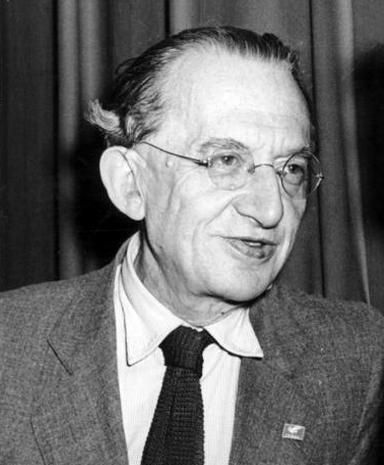
Francesco Ingravalle: Because Spann developed his own ideas, as György Lukács wrote, “on the basis of a philosophical-sociological system which is indeed radically reactionary, but in a scholastic-Catholic sense” (G. Lukács, The Destruction of Reason [1954], Italian trans. by Eraldo Arnaud, Einaudi, Turin, 1959, reprinted Mimesis, Sesto San Giovanni, 2011, vol. II, p. 650). Scholastic philosophy, derived fundamentally from the work of Thomas Aquinas, tended to conceive the political collectivity as a living organism, and thus to consider the different economic, social, and political components as the analogue of the various organs of a living body. On the basis of this analogy it is possible to reject the “contractualist” model outlined by Thomas Hobbes in the Leviathan (1651) and by John Locke (Second Treatise on Government, 1690), and shared (though not without significant departures from Hobbes’s scheme) by Jean-Jacques Rousseau, Du contrat social (1762), which regards collective life as the outcome of a voluntary agreement among individuals. The outcome of the contract is, in this perspective, public power or the State (Commonwealth, Civitas), which is therefore not the analogue of a living body, but the analogue of a machine (a mechanical clock, according to Hobbes’s followers; a balance, according to Locke’s followers; see the extensive study by Otto Mayr, Authority, Liberty, and Automatic Machinery in Early Modern Europe, Il Mulino, Bologna, 1988).
Bourgeois ideology, developed in properly political terms in France by Emmanuel J. Sieyès (Qu’est-ce que le Tiers État, published in January 1789), is the manifestation of the economic, social, and political opposition to the orders of the nobility and the clergy: a key issue was the tax burden borne by non-nobles as a consequence of the “immunities” of the nobility and clergy, on which the Third Estate’s claim to the title of nation was based.
From Spann’s point of view, the revolutionary event of 1789 could presumably be metaphorized as the rebellion of one organ against the rest of the body (according to the famous apologue of Menenius Agrippa, recounted by Livy, Ab urbe condita, II, 32), claiming to replace all the other organs. In Kämpfende Wissenschaft (1934), Spann naturally denies the legitimacy of “particular utility” in the face of the demands of the “total economy,” and sees in the capitalists the leaders of the economy and in the workers nothing more than their “following”; this organicist reading of industrial-society relations aims to deny the legitimacy of class struggle by reading industrial relations in a “feudal” key. According to Spann, social hierarchy is “given a priori,” although deriving from an ancient, empirically verifiable tradition, and is hostile to any violent change. As Lukács observed (The Destruction of Reason, vol. II, cit., p. 651), in Spann’s universalism there is no place for a theory of the nation, nor for a theory of race, nor for a mystique of the Führer. Ideologically he places himself outside fascism and National Socialism; but, as we shall see, objectively the matter is more complex. The economic, social, and political world theorized by Spann is, for the most part, the codification of the economic, social, and political world of the Ancien Régime states. His foundations are organic inequality in place of the atomistic equality theorized by the political philosophy of Hobbes, Locke, and Rousseau, the hierarchical difference of values (the saint has greater worth than the sinner, Spann writes), and the thesis that the components of society do not consist of divided (solitary) individual human beings, but consist solely of communities. From this follows the need for the articulation of society into corporate bodies and the organic coordination of society’s components: a picture opposite to the one that had taken shape since the English Industrial Revolution, whereby social divisions consist solely of owners of the means of production and of the labor force. Nevertheless, Spann (like Spengler, too, in Jahre der Entscheidung, 1933) tries to interpret industrial society in light of categories other than the clash of economic interests: those of “leaders” of the economy and of the “following of the leaders,” a tendentially “military” vision of economic and social relations. In this framework, equality, liberty, and fraternity — the ideal triad of the French Revolution — are opposed to this overall vision of social and political reality: political authority, according to Spann, coordinates corporative complexity and is essentially omnia potens, not omnia faciens. It is no accident that he writes: “The principle for designating rulers, seen universalistically, can be derived only from objective reality, proving in the last analysis to be nothing but a principle of value” (Spann, Il vero Stato, cit., II, p. 44). Economic, social, and political hierarchy forms gradually over time, Spann maintains, no differently from Edmund Burke. But he is also convinced that, in his time, a movement was under way to overcome bourgeois individualism deriving from the French Revolution, of which the scientific socialism of Marx and Engels was a notable example, all the more so since it was taken up by the October 1917 Soviet Revolution in Russia as a banner and ideological marker. In 1921 he writes (and reconfirms in the 1938 edition of Il vero Stato): “By returning to the totality, we free the spirit from the chains of individualism, thereby freeing life from the bonds of rationalism and economism. Only in this way will the State, the economy, and society be able to assume the form necessary to accommodate the higher spiritual contents of life; only then will matter come under the dominion of spirit” (Il vero Stato, cit., vol. II, p. 134).
Why did a rupture occur in the relationship between Sombart and Spann at the 1925 Vienna Congress of Sociology, given that within the Conservative Revolution they shared a common opposition to capitalism and liberalism? How did Spann’s ideas change following this rupture?
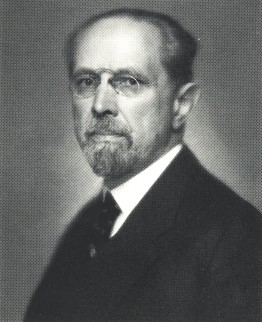
The reasons for the conflict must be sought in the fact that the research orientations and corresponding methodologies of Werner Sombart and Othmar Spann were poles apart: the former tied to an anthropological-empirical approach, the latter to a social-philosophical approach. They nonetheless arrived, at different times, at theorizing the Ständestaat (the “corporate/estate State”) — Spann in 1921, Sombart in 1934 (Deutscher Sozialismus) — and on different bases: the recovery of a centuries-old tradition or custom (Spann), or a radical innovation in the organization of production in the face of the heavy aftereffects of the crisis of October 1929. Sombart was radically opposed to the normative economics championed instead by Spann, because it was founded on merely metaphysical principles, and he rejected the identification between “essence” and “value” that is fundamental to Othmar Spann’s way of studying society. The conflict of 1925 was written, so to speak, into the scientific biography of the two scholars. Sombart analyzed the genesis of capitalism through its relationship with luxury, with the organization of war, and with the various forms of religiosity; Spann constructed a philosophical vision of the development of modern society and considered Sombart’s sociology too tied to individualism and too much a part of that modernity which he, as an intellectual of the Ancien Régime, rejected.
The German Conservative Revolution abounds in conflicts like that between Sombart and Spann; it was a complex ideological formation united only negatively by the rejection of the “Republic of defeat” in Germany — with significant echoes in Austria, the other great loser of the war of 1914–1918. The angles from which opposition to the “Republic of defeat,” the so-called “Weimar Republic,” was expressed were quite varied; to give an example: the diagnoses and prognoses of the post-war crisis elaborated by Spengler are not analogous to those elaborated by Spann, by Alfred Baeumler, Alfred Rosenberg, by Sombart, by Moeller van den Bruck, by Ernst Niekisch, by Ernst Jünger. Intellectual opposition to the Weimar Republic was multiform; when the social-racist component prevailed, it crushed every other component.
Why did the conservative revolutionaries regard Friedrich Nietzsche as a political and cultural “prophet,” and which of his concepts did they adapt to their own ideology? In this context, what was Othmar Spann’s methodological and philosophical approach to Nietzsche?
In my view the reasons are “layered.” On one hand, German (and Austrian) culture underwent a multiform crisis of the certainties built up by the spread of Positivism. First among these was the certainty represented by the theoretical constructs and technological results of the experimental sciences: with Ernst Mach and empirio-criticism, the idea gained ground that the categories of the experimental sciences are merely useful compendia of experience, not true representations of reality; on the aesthetic plane, the figurativism of painting and the “natural scale” of sounds in music came to be opposed by the need to express a depth that shatters every aesthetic convention, with Expressionism, dodecaphony, and Futurism; from 1899, with Sigmund Freud’s The Interpretation of Dreams, the conventional image of interiority as unity crumbled. Well, all these motifs are found gathered, to a large extent, in the books of Friedrich Nietzsche, which had long circulated outside university circles and which, in 1901 and 1906, were collected in a complete edition of his works. In Nietzsche’s work one finds the most radical attack on liberalism and democracy mounted in the nineteenth century; it is no accident that the Danish literary historian Georg Morris Cohen Brandes called it “aristocratic radicalism.” Already in 1907 Georg Simmel, an associate professor at Humboldt University in Berlin, published the monograph Schopenhauer und Nietzsche; but within the sphere of the Conservative Revolution, perhaps the most complete testimony to Nietzsche’s influence is Alfred Baeumler’s book Nietzsche, der Philosoph und Politiker (1931).
The trauma of the end of a world, typical of the post-1918 period, and the need to start from zero, were particularly felt in a Germany that was destroyed, devoured by inflation, and torn by civil war; Nietzsche’s diagnosis of nihilism, and his prognosis, took on a concrete meaning of particular intensity. The intellectuals grouped by historians under the label “Conservative Revolution” all cultivated both the idea of the end of a world and the need to start from zero; and, in this respect, Nietzsche’s principle, clearly present in Thus Spoke Zarathustra, that “values are not, but are posited,” applied. And Germany did indeed start again from zero, in the arts as in the sciences, as in the political sphere — though not in the economic sphere (consider the 1924 Dawes Plan, which made it possible to begin Germany’s economic reconstruction). In other words, for those hostile to the “Republic born of defeat,” Nietzsche, and his power to tear down what was already almost dead and merely vegetating, were ideal interlocutors, especially for those who came from the trenches (consider — and this is only one example — the great influence of Nietzsche’s thought on the thought of Ernst Jünger). The Third Reich then put into practice the Nietzschean philosopheme concerning democratic societies as a basis for the power of dominating personalities (consider the Führerprinzip practiced by the Party and theorized by Carl Schmitt); the ideologues of the Third Reich, too, came from the conservative-revolutionary milieu.
For Spann, Nietzsche remained radically alien as far as concerns the elaboration of social philosophy and the theory of the State. Spann’s social philosophy is an ontology of the preservation of the principles of a world that no longer exists and that must be made to exist again (as, moreover, was the case in Italy with Julius Evola); Nietzsche’s philosophy is the philosophy of the will to power, with no limits other than the relations of force between the various “nuclei” of power. Within the limits — well outlined by Hermann Rauschning in The Revolution of Nihilism (1938) — within which the Third Reich was a radical form of active political nihilism (I tried to examine this point in my 2015 book, Il mito del regresso e il nichilismo politico, published by Edizioni di Ar), one can well understand the hostility of the N.S.D.A.P. (Nationalsozialistische Deutsche Arbeiterpartei) toward Othmar Spann. Active political nihilism versus the metaphysics of politics, one might say.
Could you tell us a bit about Nietzsche’s concept of the “will to power”? What made it so important to the conservative revolutionaries?
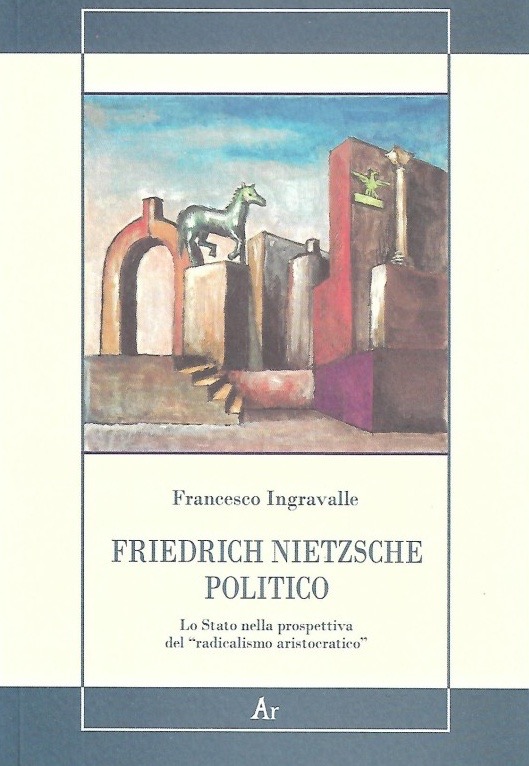
Historically, I would say, it is a reworking of a concept thematized by Arthur Schopenhauer in The World as Will and Representation (1819). Schopenhauer attempts to grasp the nature of that “thing in itself” which he considers the dynamic foundation of all reality; he believes he finds it in the “will to live” or to “persist in life” proper to every being; this objectifies itself according to fixed schemas (analogous to Plato’s ideas) and fuels the struggle of every being to survive. It is, therefore, the cause of the suffering that runs through the whole of human history, from which we can free ourselves either through aesthetic contemplation, or through the practice of compassion, which overcomes egoism (the principal instrument of the will to live), or through asceticism (following the teaching of Gautama Buddha), which extinguishes the will to live. Nietzsche reverses Schopenhauer’s judgment and claims that only decadent (or even “degenerate”) life wants to renounce life, whereas life on the rise struggles not to survive, but to exercise power: it is not from hunger, we read in The Will to Power, that the protoplasm extends its pseudopods in search of prey, but in order to expand, to become more powerful. This vision of the will to power, too, depends on a metaphysical option, as does every judgment about reality. From being — as Kant showed — no ought can be deduced, that is, no morality, that is, no justificatory metaphysics. The sphere of practice must renounce theoretical foundations, because it is the ground on which the vital projects of the different social circles that must be made to coexist through rational dialogue confront one another (Jürgen Habermas). The doctrine of the will to power is, in my opinion, socially and politically very dangerous.
What is the difference between the “metaphysics of politics” and “active political nihilism”?
The metaphysics of politics, whether “pagan” (Julius Evola) or Catholic-Thomistic (Othmar Spann, for example), starts from the conviction of a fundamental evidence in the consideration of the relationship between being and time. Within time a metatemporal dynamic would unfold which, for Evola, coincides with a “decision” of being to make itself temporality (as Schelling explained the genesis of time from divine eternity), and for Catholics with God’s will to give form to the earth and the waters, to shape Man (Adam) and Woman (Eve) in the serene garden of Eden, to send his own son to redeem the sins of Adam and Eve and their descendants, so as ultimately to bring human beings back to the dimension of Eden. Both the pagan and the Catholic-Thomistic conviction (in which Christianity has been interpreted through Aristotle’s metaphysical categories) are ungroundable and scientifically unmotivatable, because their foundation is psychological. They do not aim to explain the world in its functional forms and dynamics, but to explain why the world exists, why it exists in the way it exists.
After Marx and Nietzsche it is difficult to move within these horizons without the “will to believe” of which William James spoke. Marx maintained that the human being is the supreme being for man, and that the historical task of human beings is to build a world in which the principle “from each according to his abilities, to each according to his needs” holds; Nietzsche, by contrast, maintained that “there is a morality for those who command and a morality for those who obey” (in Human, All Too Human, 1878), and that the logic of life, which is the logic of the will to power, leads few to dominate and the many to be dominated. It is neither just nor unjust that this is so, according to Nietzsche; it simply is so, without there being either a moral reason or a theological or metaphysical one. “There is no answer to the question: why?” is the formula of nihilism; nihilism constituted the only real ideology of the N.S.D.A.P., the true foundation of the political supremacy of a small group that worked to build mass consensus; racial ideology and antisemitism were merely demagogic instruments. Although it has been repeatedly criticized, this interpretation — which is substantially that of Hermann Rauschning (The Revolution of Nihilism, 1938) — is the most convincing, especially if one reads the conversations of Hitler between 1941 and 1945 recorded by Bormann and published in Italy by Edizioni di Ar in four volumes. Political nihilism is the “anti-metaphysics of politics,” the pure and simple affirmation of politics as a nexus of power relations based on the renunciation of any search for a “strong” philosophical foundation for political action. It is not materialism, because it follows the conventionalism brought to light by Ernst Mach’s and Richard Avenarius’s critique of science; it is not spiritualism, because it is indifferent in theological matters and in matters of the theory of the soul (except as a target to be struck by political propaganda); it is the mirror of what we might call the “zero degree of ethics and politics.” It is my opinion that in 1945 only one face of it was destroyed, while, as Max Horkheimer and Theodor Wiesengrund Adorno held in the Dialectic of Enlightenment (1946), the nihilistic process continues with the development of post-war techno-financial instrumental rationality.
Fundamentally, the “legend of decline” of cultures is the regressive analogue of the “legend of historical progress.” They are two metaphysics of history, that is, complexes of claims about how the future of a culture will be. The forerunner of the regressive vision of cultural and political history is Plato, who, in the Republic, maintains that the “government of the best” always tends to transform itself into the government of the worst, through a certain number of phases, the most important of which are oligarchy and democracy. In Plato’s dualistic vision, the idea, which is eternal, can only be realized imperfectly in time and space, through an ever-greater “power” exercised by material reality over the ideal model: the government of the best becomes the government of the few, and then the government of one alone, legitimated by the masses. It is always hierarchy, but according to Plato it reflects less and less the model of justice “that is in the heavens.” Yet to speak of ideas is to speak of “objects” that are by definition removed from sensible experience and from human thought, which inevitably depends on it, and is thus to place oneself outside scientific thought (as Kant wrote: “Understanding without the senses is empty, the senses without understanding are blind”). Similarly, the thesis that human history is progress depends on the hypothesis of a connection between techno-scientific progress and moral progress, a hypothesis constantly refuted by the facts: the human being today is no better than he was two thousand years ago. Broadly speaking, the claim to predict the future (decline or progress) is without foundation, as Karl Raymund Popper showed (The Poverty of Historicism, 1944), and as Aristotle had already argued in De interpretatione, chapter 9: propositions with the verb in the future tense cannot be, until the future becomes present and then past, either true or false, but are undecidable. By “political nihilism” one usually means an orientation that regards the human being as a mere natural being, endowed with a tendency Nietzsche calls “will to power,” a tendency to bring persons and things under one’s own power. According to Nietzsche this tendency operates in the world of microorganisms, in the plant world, in the animal world, and in the human world. Nietzsche distinguishes between ascending life and decadent life, each endowed with a drive to power; in his view, at the moment when, in human cultures, power is equated with evil (as happens in Christianity, for example), decadent life develops; ascending life, by contrast, would be marked by a morality that identifies power with the good. Nietzsche’s whole thought is oriented in this direction; he distinguishes passive nihilism, the phase in which one undergoes the discovery of the world’s and becoming’s lack of meaning, from active nihilism, the phase in which customs and values are destroyed in order to bring about entirely new ones, founded on “ascending life” and its will to power. It is not surprising that Nietzsche was, objectively, one of the reference authors for National Socialist ideology, which made the ideology of the will to power its substantial core, both for the internal structuring of the German State and for the vision of international relations (of which an example can be seen in Alfred Baeumler’s 1942 essay Democrazia e nazionalsocialismo).
Why did the Nazi regime consider Othmar Spann’s ideas dangerous? How did they eliminate him? What became of the Spannkreis?
At the end of the 1920s Othmar Spann had joined the N.S.D.A.P. with a secret, unnumbered party card, and had been an animating figure of the “National Socialist Student League.” From 1919 he was full professor of Political Economy and Social Theory at the University of Vienna. In 1928 he took part in the Kampfbund für deutsche Kultur (“Combat League for German Culture”) founded by Alfred Rosenberg; he left this organization in 1931 following differences of opinion with Rosenberg himself; but in 1933 he was editor of the journal Ständisches Leben, oriented toward National Socialism. Spann cultivated the idea of a “Greater Germany,” but as a rebirth of the Empire that had been given lustre by the Habsburgs and that had collapsed in 1918; the National Socialists (and Hitler in particular) cultivated a similar idea, but as an extension to Austria of the borders of the already-defunct German Empire of 1918. Spann shared with the National Socialists the idea of the “corporative State”; but whereas for him public power was only to coordinate professional bodies that were autonomous by nature and by tradition, for the National Socialists the corporations were to be administrative extensions of the central State. The ideology of race was scientifically irrelevant to Spann’s organicist universalism, while it was the principal propaganda instrument used by the National Socialist ideologues.
When, in March 1938, German troops occupied the Austrian Republic, Spann was arrested by the Gestapo (Geheime Staatspolizei, “Secret State Police”) on 13 March 1938 and interned in the Dachau concentration camp, established on 22 March 1933 on the initiative of Heinrich Himmler — the camp that served as the model for all the other camps of the regime, and in which, according to figures from the local museum, 41,500 people died. Spann remained interned at Dachau until August 1938. He was then released, and forbidden to teach at the University of Vienna.
Why?
Any totalizing power obviously cannot tolerate any concrete dissent, but neither can it tolerate ideological dissent, on the basis of the conviction that ideas turn into actions; moreover, the Party’s propaganda had made its way precisely through “the engineering of souls” (to use Sergei Tchakhotin’s definition), which can be described as the method of Paul Joseph Goebbels and of those who worked with him in the Ministry of Propaganda. The National Socialist State model was founded on Gleichschaltung (“coordination/synchronization”), which entailed “zero tolerance” toward opponents of the Party. A significant end point was the revocation of the autonomy of the Länder.
Since racism was the ideology of the State (codified by Rosenberg in The Myth of the Twentieth Century, 1930, as well as by Hitler in Mein Kampf, 1924), the existence of a universalistic teaching could not be tolerated; the totalitarian model must level every diversity, every peculiarity, every difference, the exact opposite of the organicist model, which exists as the coordination and hierarchization of differences. The culmination of the ideology was the Führerprinzip, which Spann rejected, both in its purely political formulation and in its legal configuration at the hands of Carl Schmitt; authority, for Spann, did not consist in the charisma recognized by the crowds, but consisted in a kind of attraction that the summits of public power exercise through their example.
Moreover, Spann opposed, in 1934, Dollfuss’s Christlicher Ständestaat, with its fascistizing bent. But then how is his Party membership, his collaboration with Rosenberg, to be explained? By the substantial underestimation, typical of most German and Austrian conservative ideologues, of the political persuasive potential of propaganda in the age of mass communications (radio and cinema) and of universal suffrage.
Spann also tried, through the industrialist Thyssen, to influence the regime’s political line, founding in Düsseldorf a school of corporate/estate studies (Ständestudien) that was soon closed by order of Dr. Ley, head of the D.A.F. (Deutsche Arbeitsfront).
Among the principal figures of the “Spannkreis” one should recall Hans Riehl (1891–1965), economist and art historian, professor at the University of Graz; Wilhelm Andreae (1888–1962), economist, professor at the University of Giessen; Jakob Baxa (1895–1979), historian, scholar of Adam Müller; and Walter Heinrich (1902–1984), economist, professor at the University of Vienna. Heinrich was interned at Dachau on 15 June 1938 and then released on 31 August 1938; Jakob Baxa, by contrast, joined the N.S.D.A.P.; Andreae joined the Nationalsozialistischer Rechtswahrerbund, the official organization of all jurists, active from 1936, but in 1942 lost his chair as a follower of Spann; Riehl joined the N.S.D.A.P. in 1938. The German occupation of Austria understandably marked the end of the “Spannkreis.”
One might say that the German Conservative Revolution, as a complex and varied ideal type, oscillates between the Prussian myth — and, at times, the Bolshevik myth — of the organizing State on one hand, and the myth of feudal autonomies within the framework of the universal powers typical of the Germanic Middle Ages on the other; but the disappearance of the plurality of social subjects into the metropolitan masses, the disappearance of the political weight of landed property, and the fragmentation of lived experience along individualistic lines left room only for a totalitarian organization of social life. Revolutionaries and conservatives, between 1918 and 1932, never found a real mediation, or a political synthesis. And the story of both Otto Strasser and the “Black Front,” and of Ernst Niekisch and the journal Widerstand, shows that not even the “Revolution” was as ideologically compact a front as the “orthodox” members of the N.S.D.A.P. were. The difficult situation of those who are “untimely,” or “do not entirely belong to their own time,” typical of the conservative (and not only of the revolutionary), forced them to attempt forced alliances; in the 1920s the conservative could not fail to be fascinated by the activist development of the N.S.D.A.P., could not fail to nurture the dream of bending its leadership toward anti-modern and “anti-Weimar-Republic” goals in the name of a past presumed to be an image of “that which is eternal”; but, in the eyes of the triumphant Party, conservatives like Spann represented one of the negative poles of National Socialist propaganda: they were the Reaction, alongside the Rotfront, the “Red Front” (consider the N.S.D.A.P. anthem, the Horst-Wessel-Lied of 1929, for example verses 5–7). For the National Socialists, Spann’s organicist universalism could only belong to the “Front of Reaction”…